Pakistan’s chronic debt malaise: Why Abu Dhabi’s patience is wearing thin
- April 21, 2026
- Posted by: Tara Kartha
- Categories: Pakistan, UAE
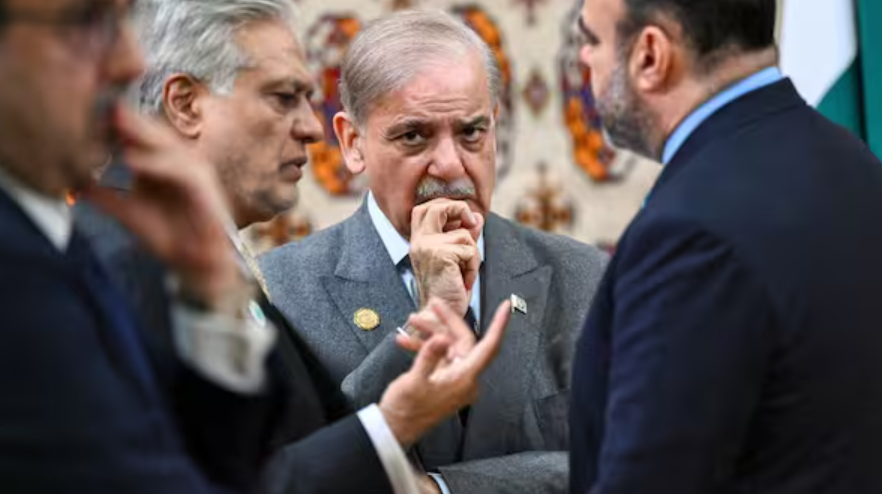
A uniform can only take you so far, no matter how lavishly it is bedecked with self-styled decorations
It seems Pakistan is in the basket again. Its own reports note that the country has decided to return $3.5 billion in debt to the UAE by the end of the month to retain its ‘dignity’. That’s going to blow a large-sized hole in their forex reserves. Diplomatic tensions have been going on for some time, but the fact that Abu Dhabi chose to turn the screws indicates a larger unease with Islamabad’s policies in a highly complicated neighbourhood. This is a layered relationship, and no one reason is behind this.
STORY CONTINUES BELOW THIS AD
The UAE Once Bet Big on Pakistan
The UAE has long been a major economic partner to Pakistan, providing it with loans, and more importantly, it is one of the largest investors in the country. Taken together, it’s rather formidable. Its foreign ministry notes investment in telecommunications, banking, real estate and oil sectors, while state companies have contributed to stabilising the country by purchasing shares in Pakistani companies offered for privatisation.
More from Opinion
Epic Fury and Operation Sindoor: Stories of thumping triumphalism and chronic pessimismShiva beyond borders: How a viral Persian bhajan reveals enduring India-Iran civilisational connect
For instance, the Abu Dhabi Group purchased Al Falah Bank and UBL Bank. Emirati Telecommunications also purchased some shares of the Pakistan Telecommunications Company for an amount exceeding $2 billion, while the Abu Dhabi Ports Company signed a framework agreement for the operation and development of Karachi Port Trust. Total investments are some $10 billion. Apart from this was a rolling deposit of $2 bn to shore up its monetary support in terms of the requirements of the International Monetary Fund (IMF). The UAE irritation was, however, apparent as the terms of the loan steadily increased from about 3 per cent to 6 per cent, even while the term was extended last year to months rather than the usual annual rollover. Apart from that was the withdrawal from the plan to operate Islamabad International Airport because it could not find a competent local operator.
Other investments have not done much better. Pakistan-Arab Refinery Limited (PARCO), a joint venture between the Government of Pakistan (60 per cent) and the Emirate of Abu Dhabi (40 per cent), has faced serious operational and financial difficulties in Pakistan, including thievery from the pipeline which led it to shut down sections. Pakistan’s circular debt is an additional layer of financial resourcing problems. Other countries have suffered similarly.
Last year, for instance, Saudi and Kuwaiti investors threatened Pakistan with a US$2 billion claim under the OIC investment agreement for blocking the sale of a Karachi electric utility and interfering with a regulator’s decisions on tariffs. The Saudis also seem to be losing interest in Reko Diq and other projects as they shift from government-to-government deals to B2B models.
STORY CONTINUES BELOW THIS AD
Pakistan’s Problems
But that’s not the whole story. After all, in recent days – well before the Iran crisis – Pakistanis were not being given visas, with an 80 per cent rejection rate. This was on the back of organised criminal activities, organised begging, and document irregularities. Over 3500 – or probably double that – are in UAE jails. Therefore, there is one part of the story that is entirely based on the hollowness of the Pakistani state and its inability to function. The UAE remained the top source of foreign remittances in February with inflows recorded at $696.2 million (February 2025), followed by Saudi Arabia with $685.5 million. That’s a lot of money.
The Saudi Connection
A second issue is, however, based on Pakistan’s increasing proximity to the Saudis. While the Saudis were once partners with the UAE in managing conflicts like the one in Yemen, where the Saudis ‘managed’ the north while the UAE did so in the south, cultivating the Southern Transitional Council (STC) through financial and political support after Houthi militants were expelled in 2015. In December 2025, a local dispute in Yemen’s southern Hadramaut region escalated. A deputy governor seized control of a government oil facility, prompting UAE-aligned STC forces to intervene.
STORY CONTINUES BELOW THIS AD
Saudi Arabia responded by declaring instability near its border a national security threat and deploying its newly trained National Shield Forces into northern Hadramaut and surrounding areas. Experts note another issue. The US ‘outsourced’ Sudan to the Saudis, who promptly announced they would buy all of Sudan’s gold resources and then supply the Sudanese Armed Forces with Pakistani weapons.
That in turn effectively displaced the UAE as a source of influence in the region. And it put Pakistan directly in the firing line of its displeasure. That worsened as the Saudis and the Pakistanis signed the ‘Strategic Mutual Defence Agreement’ that seemed to put Pakistanis’ nuclear weapons also at the disposal of Riyadh. Here it is worth remembering that the Saudis once financed the Pakistani nuclear programme.
In 1999, then Saudi defence minister Prince Sultan bin Abdulaziz visited Pakistan’s unsafeguarded centrifuge enrichment site at Kahuta near Islamabad and also saw mock-ups of Pakistan’s nuclear weapons. To date, he remains the only foreign dignitary to have ever done so. That misguided step, which was hailed as a prime ‘strategic’ move, undid years of Pakistani diplomacy aimed at an even-handed approach. Added to all this is the fact that the UAE maintains a good relationship with Israel, even while criticising its actions. That adds yet another layer to a difficult relationship.
STORY CONTINUES BELOW THIS AD
Pakistan’s Miscalculations
Pakistan’s calculation was simple. While termed a ‘mutual’ defence agreement, the Saudis were hardly capable of standing by Pakistan in a war, but they could fund the growth of the army in particular. Pakistan was, in any case, already providing training and even manning much of the Saudi Armed Forces, besides getting access to the best of US weapons that Washington supplied Riyadh with. That included the Rafael, though a different version from what India had. For the Saudis, this was a defiance of the US, from whom it had long been cajoling for a security pact.
But with the first drone attacks that hit the kingdom, the Saudis summoned Field Marshal Asim Munir, with defence minister Prince Khalid posting pointedly that the two had discussed the attacks “and the measures needed to halt them within the framework of our Joint Strategic Defence Agreement”. Given that, Islamabad’s only choice was to go for a mediation exercise. Fighting Iran conventionally was out of the question, though Islamabad fronted all kinds of groups against it, probably with US blessing. None of those complicated moves have done it any good in anyone’s eyes, particularly the UAE, who views the whole mutual defence issue with trepidation.
STORY CONTINUES BELOW THIS AD
This is the background against which the UAE demanded that the Pakistanis return their money. The actual amount will be in excess of $3.5 bn, making an 18 per cent hole in its forex reserves. The deposit is part of the IMF conditionalities, which require it to maintain $12.5 billion in rollovers, together with other contributing countries like Saudi Arabia and China. It may be recalled that the Saudis had given their tranche at the very last minute last year. Pakistan’s being a dependant was bad enough during peace.
During war, when all of these countries are in serious economic difficulties, such generosity will be difficult to continue. Meanwhile, the International Monetary Fund has warned against subsidies of any kind, which in turn lead the prices of fuel to literally explode.
In other words, the UAE demand could not have come at a worse time. While the army has decided to run the country, including the economy, its sheer inability to recreate institutions to run a country and a hugely adventurous foreign policy have brought the state to its knees. A uniform can only take you so far, no matter how lavishly it is bedecked with self-styled decorations. As the public are forced to pay up and dig deep into their pockets, questions are going to be asked. The sight of top generals speeding along in their cars won’t help. Perhaps some of them, especially at the top, should consider a bicycle.
STORY CONTINUES BELOW THIS AD
(The writer is Director [Research and Analysis] at the Centre for Land Warfare Studies. Views expressed in the above piece are personal and solely those of the author.