Inside Beijing’s Economic Debate: Trade Wars And Opportunity
- September 17, 2025
- Posted by: Antara Ghosal Singh
- Category: China
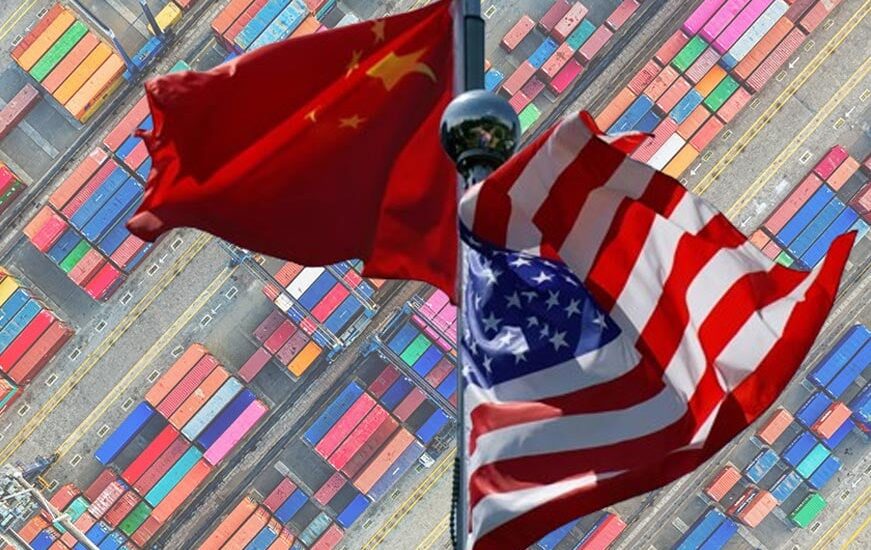
China’s policymakers grapple with shifting trade routes and domestic reforms as new deals reshape its economic trajectory.
Ever since the United States (US) President Donald Trump extended China’s tariff deadline for the second time on 12 August 2025, the topic of a possible “Sino-US tariff truce” and its implications has garnered significant global attention. Internally, within Chinese domestic circles, the issue has spurred an intense debate and discussion. This article—based on a study of Chinese language literature—seeks to capture the essence of public discourse within China over the ongoing China-US trade war, the evolving global economic situation, and the future of Beijing’s economy.
Chinese Discourse on the US-China Trade War
One set of arguments advanced by the Chinese media, as well as some Chinese public intellectuals, is that Trump 2.0’s rhythm in terms of tariff war has been broken. Trump seems to have “chickened out”, and China is gradually gaining an upper hand in this round of the US-China trade friction.
At the start of Trump’s second term, many expected to see a surge in China’s exports, economic collapse, or social instability due to the trade war. However, in reality, China continued to experience good news: its Gross Domestic Product (GDP) grew by 5.3 percent in the first half of the year, exports increased by 7.3 percent in the first seven months, and the trade surplus reached US$683.5 billion, marking a 31.9 percent hike.
This has been largely projected as China’s grand victory in its first-ever showdown with the US. These developments are anticipated to become a critical turning point for the long-term US-China competition and will result in a permanently altered equation between the two great powers.
Trump seems to have “chickened out”, and China is gradually gaining an upper hand in this round of the US-China trade friction.
On the other hand, China is carefully watching the trade deals the Trump administration has concluded thus far. For example, on 2 July 2025, as the US and Vietnam reached an agreement, China fumed. The agreement included a reduction in the base tariff on Vietnamese goods from 46 percent to 20 percent. However, a 40 percent punitive tariff will be imposed on third-party goods that are transhipped through Vietnam to the US. Furthermore, Vietnam pledged to open its market for US goods, with zero tariffs. Following the Vietnam deal, the Chinese strategic community asserted that Vietnam should not set a precedent and that “more fishes should not slip through China’s net”.
Despite China’s efforts, other agreements followed one after another. By the end of July, President Trump announced the culmination of five important trade agreements with countries including the United Kingdom (UK), Vietnam, Japan, the Philippines, and Indonesia. Within the US-Japan agreement, the latter reportedly agreed to invest up to US$550 billion in the US and significantly open its market to the US—particularly in the automotive and agricultural sectors—while reducing its reliance on China for its supply chains.
The Philippines has almost completely waived tariffs on US goods and even made concessions on military cooperation, and even then, the US imposed a 19 percent tariff on the Philippines’ imports (slightly lower than the previously threatened 20%, but still on the higher side).
Notably, Indonesia has been compelled to remove numerous trade barriers for US companies, including the elimination of agricultural product inspections, acceptance of US certification, alleviation of export restrictions on critical minerals, and the purchase of US oil, gas, and agricultural products. Moreover, the US imposed a 40 percent tariff on Indonesian products containing components from ‘non-market economies’ (such as China and Vietnam).
The overall perception in China is that its entrepôt/re-export trade empire is dead.
China expressed its discontent that right after concluding her trip to China for the 25th China-EU Leaders’ Meeting, the EU president signed a trade agreement with Trump, which included a 15 percent tariff on goods imported into the US. Additionally, the agreement outlined EU plans to increase investments in the US by US$600 billion and to purchase American military equipment and energy products valued at a total of US$750 billion. This, the Chinese strategic community argued, is a harsh reminder that China should not have many illusions about relying on Europe to deal with Trump 2.0.
The overall perception in China is that its entrepôt/re-export trade empire is dead. By 2024, 15 percent of China’s exports to the US were getting re-exported via Southeast Asia, but the new trade deals have completely blocked this route. Meanwhile, on the China-US direct trade negotiation front, these agreements seem to be bolstering the US confidence in negotiations with China and leading to a more assertive stance, thereby altering the future structure of international trade and creating a situation unfavourable to China.
Debate on the Domestic Economy
Domestically, one can see a fierce ‘investment vs. consumption debate’ brewing in China, where people are questioning how long China can carry on with its policy of ‘investing too much and consuming too little’. In this context, the role of local governments, known to have been instrumental in China’s economic development over the past decades, is increasingly being questioned.
It is argued that even as China has shifted from a shortage economy to a surplus economy, local governments have continued to prioritise capacity expansion as their core competitiveness, leading to overcapacity in various industries. Earlier, a considerable proportion of Chinese products was consumed by consumers in Europe and the US. However, with the aggressive tariffs imposed by the US and the global pushback against Chinese products, a trend of severe internal involution has gripped the Chinese economy.
These internal involutions have led to falling prices and compressed profits for Chinese businesses across the industry. This has manifested itself at the macroeconomic level in the continued decline of the Producer Price Index (PPI), forcing companies to expand or maintain production, despite being unprofitable or even losing money, creating a typical internal involutionary cycle.
China aims to transition from its old development model to a new one, emphasising domestic circulation as the primary driver. This means that the Chinese market should spearhead China’s growth and its role in the global economy.
The Chinese government is also promoting the construction of a national unified market and comprehensively rectifying ‘involutionary’ competition as a major reform to stabilise the Chinese economy. Various guidelines and economic work reports have been released since the beginning of the year to achieve these goals.
China’s development cannot ignore the enormous potential of the Indian market of 1.4 billion people…Chinese businesses need profit and a larger market.
There is significant discussion about whether some of the economic power previously delegated from the central government to local governments should be returned to the central government or market forces (mainly in emerging industries) to have a more direct effect in boosting consumption, stabilising prices, and promoting a more sustainable economic development in China. But the ambitious reform ideas face tough challenges as well, as the existing regional economic landscape in China, dominated by all-powerful local governments, stands in contradiction to such changes.
Discussions on India-US Trade Tension
China has long kept a close eye on India’s trade negotiations with the US, which they believe can have a far-reaching impact on the global supply chain and geo-economic landscape, largely to China’s disadvantage. In early May 2025, following India’s announcement of an agreement on the reference framework for the first phase of bilateral trade negotiations, China issued stern warnings to India. It cautioned India against working with the Trump administration and “selling out Chinese interests”. In the following months, China has directly punished India with a rare earth embargo and investment control. Now that the US-India relationship has halted, some Chinese strategists breathed a sigh of relief. Many believe an ‘opportunity’ has finally arrived to pursue China-India economic cooperation aggressively. At a time when export markets are shrinking rapidly and domestic consumption is yet to pick up pace, “China’s development cannot ignore the enormous potential of the Indian market of 1.4 billion people…Chinese businesses need profit and a larger market,” observes Chen Jing, a pro-industry voice and a regular commentator on India-China ties. He further advocates that China needs to bargain with India from a position of strength and ensure that the Chinese capital’s profits in India are guaranteed while technology transfer remains to a minimum. Others, however, remain somewhat sceptical about the prospect of China and India joining hands to deal with the growing US economic hegemony. Despite current trade and tariff differences, the US and India have a strong convergence of interests in addressing China. China-India re-engagement, they argue, will only strengthen India’s position in its negotiations with the US. The moment the US makes an attractive offer, India will surely trade China’s interests to strike a deal with the US.
As India aims to recalibrate its economic engagement with China, the underlying economic discourse (in China) must be studied in greater detail to understand the latent subtext in Beijing’s actions.
Antara Ghosal Singh is a Fellow at the Strategic Studies Programme, the Observer Research Foundation.
- International Affairs
- China
- India
- Russia and Eurasia
- USA and Canada
- china gdp
- economic outlook china
- us china trade war
- us india trade negotiations
- us tariff on china
The views expressed above belong to the author(s).ORF research and analyses now available on Telegram! Click here to access our curated content — blogs, longforms and interviews.