From Nicaragua to India: When Students Become the Vanguard of Political Change
- September 5, 2026
- Posted by: AKHIL BAKSHI
- Categories: America, Antartica, India, Latin America
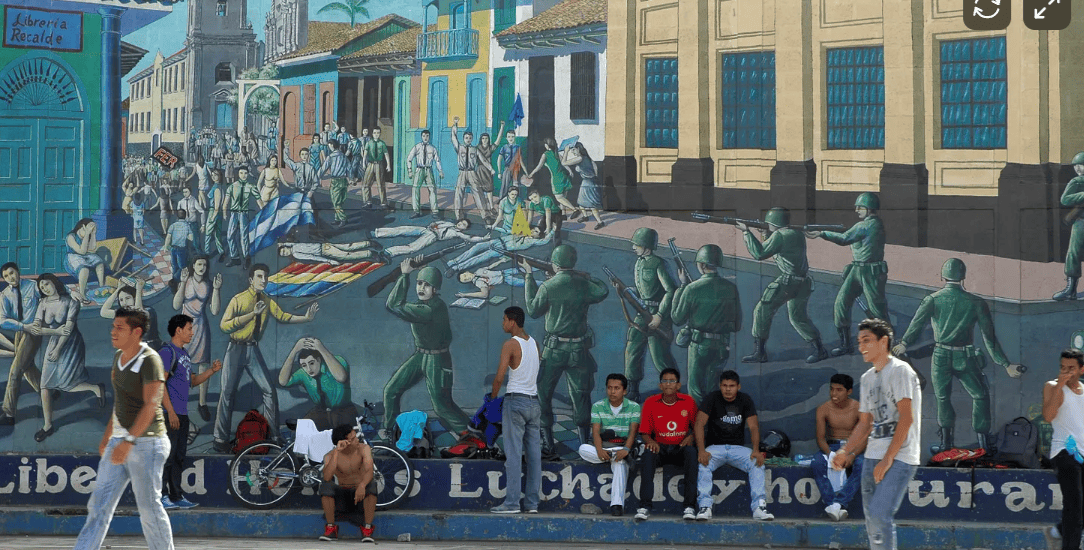
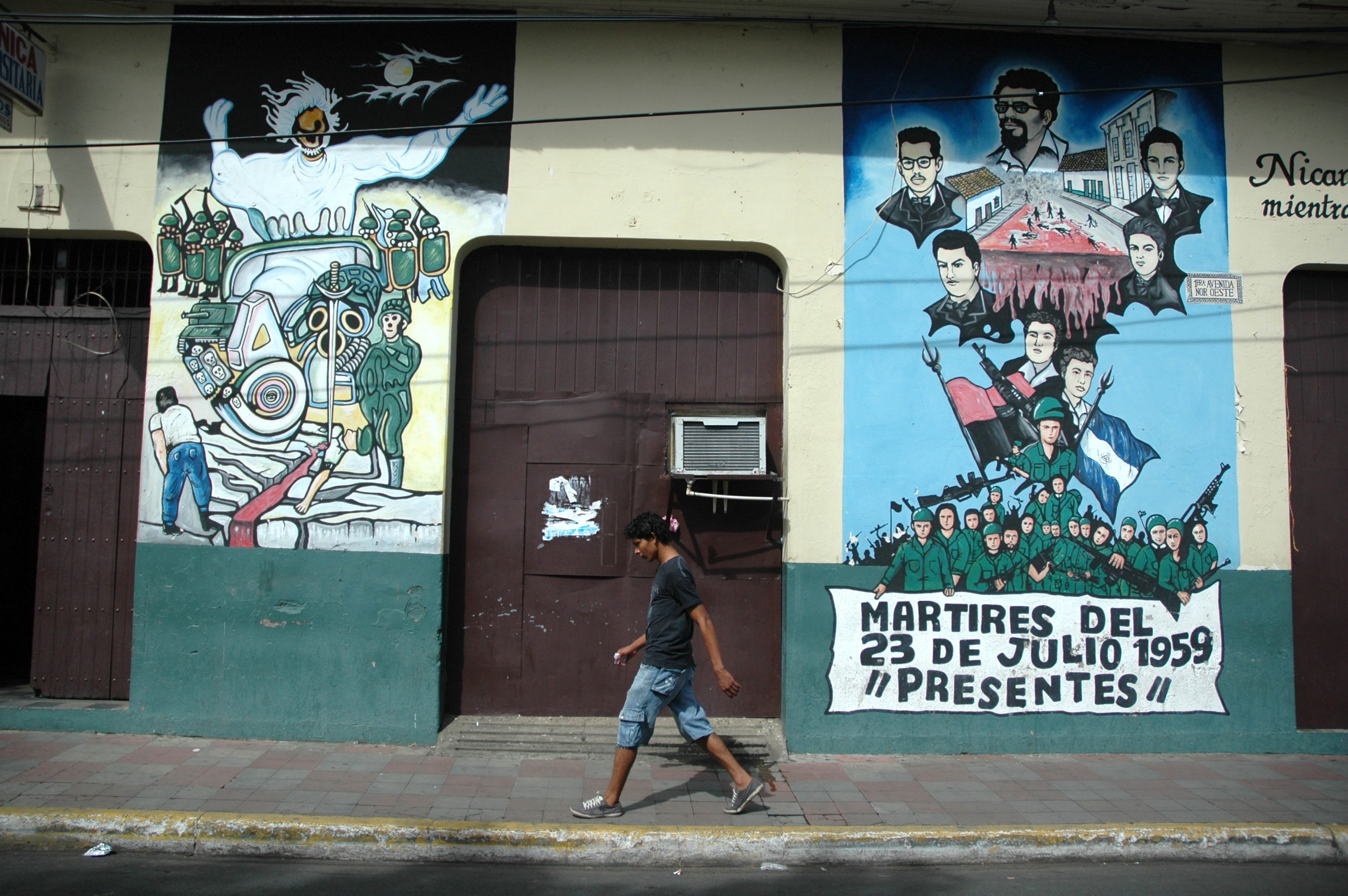
A few years ago, during a four-month overland journey from the Arctic to Antarctic, I found myself standing in front of a giant mural in León, Nicaragua’s cultural and intellectual capital. It commemorated four university students killed on July 23, 1959, after government forces opened fire on a peaceful protest.
At the time, I regarded it as another poignant chapter in Latin America’s turbulent past.
AKHIL’s Substack is a reader-supported publication. To receive new posts and support my work, consider becoming a free or paid subscriber.Subscribe
Today, it feels uncomfortably current.
Nicaragua’s President Daniel Ortega, once celebrated as a revolutionary who helped overthrow the Somoza dictatorship in 1979, has announced that his country will hold no further elections. According to Ortega, elections merely create opportunities for the opposition to regain power. Instead, he intends to use the legislature – which his party overwhelmingly controls – to erect what he calls a legal “wall” against political opponents.
There is a striking irony here. A revolution that promised democracy has reached a point where its principal architect argues that democracy itself is dispensable.
History has an extraordinary sense of humour.
Standing before that mural in León, I learnt that students have always occupied a special place in Nicaragua’s political story. Long before Ortega became its dominant leader, university campuses had become the crucibles of resistance against dictatorship.
The inspiration was Augusto César Sandino.
Dismissed by Washington as a bandit, Sandino became a folk hero across Latin America. The illegitimate son of a wealthy landowner and an indigenous servant, he fled Nicaragua after attempting to kill a politician’s son who had insulted his mother. Exile in Mexico exposed him to anti-imperialist and socialist ideas that transformed his worldview.
Returning to Nicaragua in 1926, he assembled a ragtag guerrilla force armed largely with machetes and obsolete rifles and declared war on the United States Marines supporting Nicaragua’s government.
Militarily, Sandino never posed an existential threat to American forces. Politically, however, he became something much larger. He successfully portrayed himself as the symbol of Latin America’s resistance to foreign domination.
The Great Depression eventually reduced America’s appetite for overseas interventions. US troops withdrew after installing a friendly government. Sandino accepted peace, pledged loyalty to the new president and agreed to disarm.
Weeks later, he was assassinated by General Anastasio Somoza García’s National Guard.
The Somoza family would rule Nicaragua for more than four decades.
But Sandino’s ideas refused to die.
Among those inspired was Carlos Fonseca, a university librarian who believed education itself could become an instrument of revolution. He organised literacy campaigns, fought for university autonomy and encouraged students to become politically engaged. Universities became centres of opposition to dictatorship.
In June 1959, Fonseca was badly wounded while participating in a failed guerrilla expedition launched from neighbouring Honduras. News of the attack electrified Nicaragua’s campuses.
On July 23, around 300 students marched silently through León carrying national and university flags. They had official permission to demonstrate but were warned to stay away from National Guard headquarters.
They didn’t.
Soldiers blocked their path. Tempers flared. Students shouted insults. Five protesters were arrested.
The military eventually agreed to release them if the demonstration dispersed. Instead, confusion grew. Tear gas was fired after curfew expired. As panic spread, some soldiers opened fire without orders. Nearly sixty rounds were discharged before officers regained control.
Four students died.
The mural I stood before immortalised that tragedy.
Those deaths became part of Nicaragua’s democratic struggle. Student activism gathered momentum, eventually contributing to the revolutionary movement that overthrew the Somoza dictatorship in 1979.
Yet nearly half a century later, Nicaragua has arrived at an extraordinary destination. The revolutionary has become the ruler. The liberator has become intolerant of opposition. The movement born in resistance now insists elections are unnecessary.
That transformation offers an important lesson.
History shows that revolutions are not automatically safeguards against authoritarianism. Quite often, they merely replace one political elite with another. Yesterday’s dissidents can become today’s gatekeepers. The slogans change; the instinct to preserve power often does not.
Which brings us to India.
India is not Nicaragua. It remains a constitutional democracy with regular elections, an independent judiciary, a noisy media ecosystem and vigorous political competition. Any attempt to draw simplistic parallels would be both inaccurate and unfair.
Yet one similarity deserves attention.
Students are once again emerging as important political actors.
Across Indian campuses, student organisations have become deeply involved in national debates over employment, constitutional rights, education, social justice and governance. Critics of the ruling establishment – sometimes using the scornful label “Cockroach Janta Party” – believe a broad youth movement is gathering momentum against the government. Supporters argue that student activism has always been politically aligned and that today’s mobilisation is simply another chapter in democratic politics.
Whatever one’s political preferences, history suggests that governments ignore student movements at their peril.
Students possess something unique. They are less invested in the status quo, more willing to question accepted narratives and often quicker to identify emerging social currents than established political parties.
This has been true across continents.
The Paris student uprising of 1968 transformed French politics. American campuses became the epicentre of opposition to the Vietnam War. South Korean students challenged military dictatorship. Tiananmen Square became the defining image of China’s democracy movement. The recent political upheavals in Sri Lanka, Nepal and Bangladesh were significantly driven by student mobilisation.
Nicaragua belongs to that long tradition.
So does India.
Student politics, of course, is rarely perfect. Young movements are often emotional, fragmented and susceptible to manipulation by larger political organisations. They do not possess a monopoly on wisdom. Nor does every student protest represent a democratic renaissance.
But they perform an indispensable function.
They ask uncomfortable questions before the rest of society is prepared to do so.
That is why authoritarian governments instinctively distrust universities. Independent campuses produce independent minds. And independent minds are notoriously difficult to control.
Daniel Ortega understands that.
Ironically, he once benefited from precisely the kind of student activism his government now suppresses.
The mural in León captures that irony better than any history book could. It commemorates four young people whose deaths became symbols of resistance against dictatorship. They believed political participation mattered. They believed governments should remain accountable. They believed dissent was not treason.
Whether in León, Delhi or anywhere else in the world, students will almost certainly continue asking uncomfortable questions long after today’s rulers have passed into history.
That has always been the peculiar power of youth.
And perhaps its greatest responsibility.
(Akhil Bakshi is the author of Arctic to Antarctic: A Journey Across the Americas)