Ebola hits Africa summit, but opens space for India’s health diplomacy
- June 22, 2026
- Posted by: Ambassador Gurjit Singh
- Category: Africa
The Ebola crisis is both a setback and a test. It delays an important diplomatic milestone, but it also offers India an opportunity to show that its partnership with Africa is rooted not merely in summit declarations, but in responsiveness during moments of vulnerability and crisis.
The postponement of the fourth India-Africa Forum Summit (IAFS IV) due to the Ebola outbreak is unfortunate. India and the African Union Commission (AUC) have made efforts to revitalise the IAFS process.
The summit was expected to mark a renewal of India-Africa engagement when both sides are repositioning themselves in a rapidly altering global order. Instead, public health insecurity has once again intervened, echoing the disruption caused by the 2014 West African Ebola crisis, which similarly overshadowed Africa’s international diplomacy and economic outreach.
STORY CONTINUES BELOW THIS AD
This repetition is symbolic of a larger reality confronting Africa and the wider Global South: health security is now inseparable from diplomacy, economic cooperation, mobility and strategic partnerships. The fact that Ebola has once again affected the timing of a major India-Africa engagement underlines the continuing fragility of public health systems in parts of Africa and the need for stronger continental preparedness mechanisms.
More from Opinion
Rubio’s India visit puts Quad back in focus as China looms largeSecuring NEET through a resilient NTA
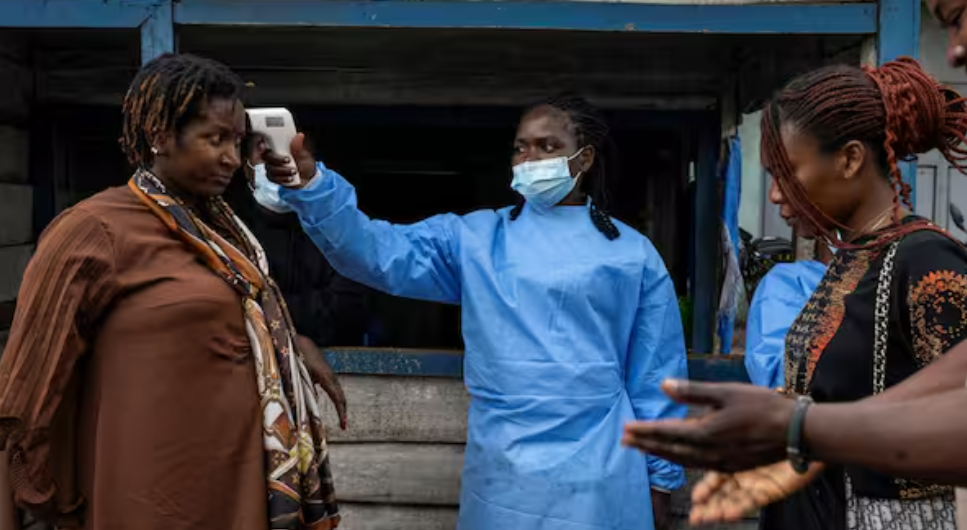
The present outbreak is concentrated in the Democratic Republic of the Congo, in Ituri Province and parts of North Kivu, with confirmed spillover cases in Uganda. The outbreak involves the Bundibugyo strain of Ebola virus disease, a rare variant for which there is currently no fully approved vaccine. The World Health Organisation has declared the outbreak a Public Health Emergency of International Concern, while the Africa Centres for Disease Control and Prevention has designated it a Public Health Emergency of Continental Security.
Health authorities are concerned because the affected areas are highly mobile border regions characterised by conflict, weak health infrastructure, informal cross-border movement, and difficult terrain. Uganda’s cases are linked to travel from eastern Congo, raising fears of wider regional transmission towards South Sudan, Rwanda, Burundi, Kenya, and potentially beyond.
Ebola is among the world’s most lethal viral diseases. It is caused by infection with orthoebolaviruses and spreads through contact with bodily fluids such as blood, vomit, saliva, sweat, semen, or contaminated surfaces. It is not airborne, but spreads rapidly in communities and healthcare settings where infection-control systems are weak. Symptoms include fever, fatigue, vomiting, diarrhoea, muscle pain, and, in severe cases, internal and external bleeding, organ failure, and death. Fatality rates can vary from 25 per cent to as high as 90 per cent depending on the strain and the quality of medical intervention.
The Bundibugyo strain currently circulating is worrying because it is less well known than the Zaire strain. Existing vaccines developed during earlier outbreaks may not offer adequate protection. Scientists and public health agencies are relying on surveillance, isolation, contact tracing, protective equipment, laboratory testing, and community awareness rather than mass vaccination.
The postponement of IAFS IV is understandable from a public health perspective. African governments would be reluctant to attend an international summit while health systems are mobilised for emergency containment. International travel restrictions, screening requirements, and concerns about cross-border transmission complicate summit logistics. Yet diplomatically, the delay is unfortunate because India and Africa had hoped the summit would revitalise a relationship that has lacked a top-level institutional platform since IAFS III in 2015.
India’s engagement with Africa has expanded significantly during the intervening period through development partnerships. The African Union’s admission to the G20 during India’s presidency gave new momentum to the partnership. The Ebola crisis now risks slowing that momentum.
STORY CONTINUES BELOW THIS AD
However, the crisis also creates an opportunity for India to demonstrate practical solidarity rather than merely rhetorical partnership. Immediate assistance to the Africa CDC and affected countries would carry enormous diplomatic and humanitarian significance.
The first requirement of the Africa CDC will be emergency medical support. This includes personal protective equipment, diagnostic kits, mobile laboratories, thermal scanners, field hospitals, isolation tents, and intensive care supplies. India can rapidly mobilise such support through its pharmaceutical and medical manufacturing ecosystem, much as it did during the Covid-19 pandemic. Indian companies already have the capacity to supply large volumes of PPE kits, gloves, masks, disinfectants, IV fluids, and generic medicines at affordable prices.
Second, Africa CDC will require laboratory and surveillance support. Ebola containment depends on rapid testing, genome sequencing, and contact tracing. India may deploy mobile diagnostic laboratories and public health experts through the Indian Council of Medical Research and the National Centre for Disease Control. Technical cooperation agreements could support African epidemiologists in sequencing and data management.
STORY CONTINUES BELOW THIS AD
Third, the Africa CDC will need training and capacity-building support for frontline health workers. Indian medical institutions can immediately offer virtual and on-site training modules on infection prevention, biosecurity protocols, and emergency outbreak management. Telemedicine platforms developed by India could also help connect African doctors in remote regions with specialists elsewhere.
Fourth, logistics and airlift capabilities are crucial. India’s HADR capacities, including military transport aircraft, could be used to deliver emergency supplies to affected countries promptly. During previous crises, India demonstrated an ability to combine diplomacy with operational support, and similar mechanisms can now be activated.
Fifth, India can support the Africa CDC financially through a dedicated emergency health security fund for Africa. Even a modest but visible contribution would reinforce India’s image as a trusted development partner at a time when traditional global health financing is under strain.
Finally, India should ensure that the postponement of IAFS IV does not become another prolonged interruption. A virtual ministerial mechanism between India, the AUC, and the Africa CDC should continue preparations for the summit while coordinating health responses. In fact, health security itself should now become a central pillar of the future IAFS agenda.
STORY CONTINUES BELOW THIS AD
The Ebola crisis is both a setback and a test. It delays an important diplomatic milestone, but it also offers India an opportunity to show that its partnership with Africa is rooted not merely in summit declarations, but in responsiveness during moments of vulnerability and crisis.
(The writer is a former ambassador to Germany, Indonesia, Ethiopia, ASEAN, and the African Union. His recent book is ‘The Durian Flavour on India and the Act East Policy’. Views expressed are personal and solely those of the author.