‘Brics not irrelevant, but…’: India-China thaw could redefine geopolitics, says former envoy
- November 23, 2026
- Posted by: admin
- Category: Uncategorized
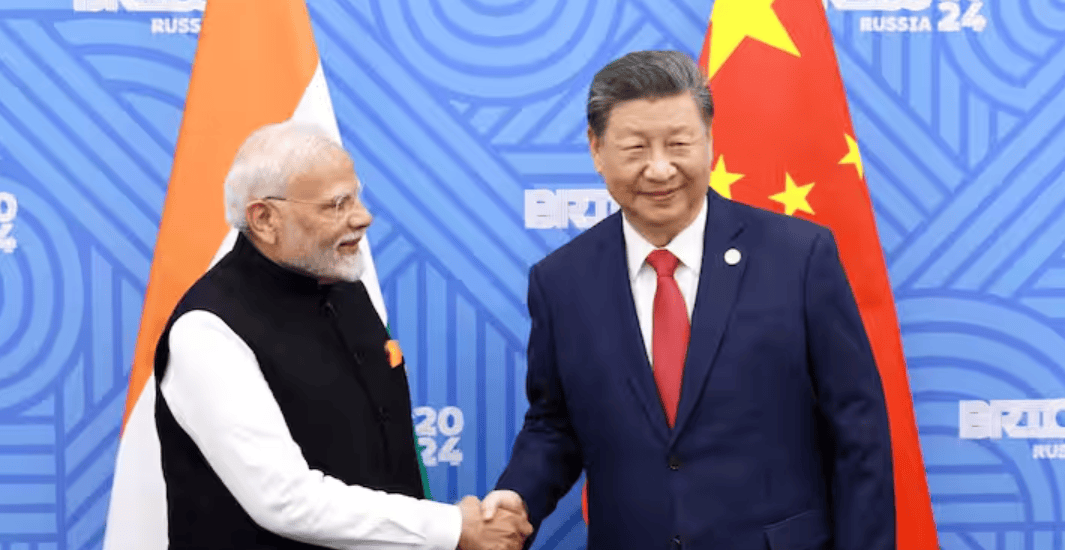
The thaw in ties between India and China could have implications far beyond the two Asian neighbours, potentially giving a new direction to the Brics grouping and reshaping the wider geopolitical balance.
he thaw in ties between India and China could have implications far beyond the two Asian neighbours, potentially giving a new direction to the Brics grouping and reshaping the wider geopolitical balance.
After years of tensions along the border, signs of renewed engagement between New Delhi and Beijing are now raising questions about what their rapprochement could mean for a bloc that has increasingly sought to present itself as an alternative to West-led institutions.
Former Indian ambassador Anil Trigunayat said Brics should not be seen as an irrelevant grouping, but its future influence would depend significantly on how major members such as India and China manage their differences and areas of cooperation.
Their ability to work together inside Brics, even while competing elsewhere, could determine whether the expanded grouping can turn its growing geopolitical weight into practical cooperation.
Border stability opens the door to normalisation
The most important change in India-China ties has been the gradual restoration of dialogue and mechanisms aimed at keeping tensions along the Line of Actual Control under control. The border dispute remains unresolved, but both sides have increasingly focused on preventing another crisis from derailing the wider relationship.
This has been accompanied by efforts to revive some of the links that had been disrupted after Galwan. Diplomatic and military channels have resumed, while steps have also been taken towards restoring people-to-people exchanges, including travel and pilgrimage links.
However, for India, normalisation is unlikely to mean returning to the old relationship. New Delhi continues to view border peace as a prerequisite for broader ties, while remaining cautious about China’s growing economic and strategic influence.
Trade brings cooperation — and competition
The economic relationship demonstrates this contradiction clearly. China remains one of India’s biggest trading partners, creating strong incentives for both sides to maintain commercial engagement. At the same time, India’s large trade deficit with China remains a major concern.
Advertisement
Trigunayat has pointed to this imbalance as one of the key issues India needs to address, even as China remains an important economic partner.
Technology presents a similar challenge. India wants access to global supply chains, manufacturing capabilities and technology while seeking to reduce excessive dependence on any single country.
The result is an increasingly compartmentalised relationship: cooperation where interests overlap, competition where they do not, and efforts to prevent either from turning into open confrontation.
Can India-China competition coexist inside Brics?
This is where the India-China thaw acquires a larger significance. Brics has expanded far beyond its original membership and now brings together countries with differing political, economic and strategic interests.
Maintaining consensus has therefore become more difficult, but the grouping has also acquired greater weight as a platform for the Global South.
Trigunayat argues that Brics is “not irrelevant by any standard” and says its founding members need to provide the institutional support required for it to emerge as a major non-Western platform supporting multilateralism.
India and China already have a record of cooperation within the grouping. According to Trigunayat, the two countries have broadly collaborated within the Brics framework, reflected in the two dozen consensus documents agreed upon so far.
That cooperation could become more important as India seeks to make its presidency focused on delivery rather than declarations. The agenda spans trade, investment, technology, health, energy, agriculture, finance and digital cooperation.
India’s presidency has involved more than 350 meetings across 35 verticals, aimed at creating a more integrated architecture for practical cooperation among members.
A test for the wider Brics vision
The India-China relationship could therefore offer Brics a useful model: countries do not necessarily need to resolve every strategic dispute before cooperating on issues of common interest.
For India, that means maintaining pressure on China over unresolved concerns while ensuring that bilateral tensions do not block cooperation in forums such as Brics.
For China, it means recognising that strategic competition with India can coexist with engagement on trade, development and global governance.
This balancing act will be crucial as Brics seeks a larger role in a changing international order. Trigunayat argues that the grouping has acquired significant weight, but greater consensus among its leading members is needed if it is to push meaningful reforms in global institutions.
Advertisement
The India-China thaw, therefore, may not be about ending rivalry. Its larger significance could lie in showing that rivalry itself can be managed.
If New Delhi and Beijing can stabilise their bilateral relationship while continuing to compete, and still work together inside Brics, they could help give the grouping a new dynamic — one built not on strategic alignment, but on competition with cooperation to avoid conflict.