ASEAN challenged by the Iran crisis
- June 12, 2026
- Posted by: Ambassador Gurjit Singh
- Categories: ASEAN & ARF, China, Philippines, US
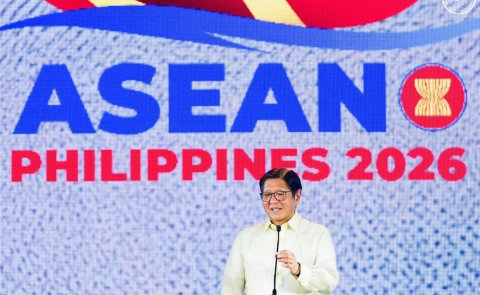
The West Asia conflict has disrupted global stability, impacting ASEAN economies and diplomacy. As chair, the Philippines balances its alliance with the U.S. and regional neutrality, while Indonesia and Malaysia reflect domestic support for Arab states. With energy shocks, remittance risks, and inflation rising, ASEAN’s limited influence is evident. Has ASEAN once again been drawn into a vortex of crises beyond its control?
The first quarter of 2026 has brought strategic upheavals globally. These have not left the ASEAN countries unscathed. The ASEAN chair, the Philippines, is facing hard choices early in its chairmanship. Confronted by aggressive Chinese intent, the Philippines had sought to focus its chairmanship on an agenda for the region, particularly the South China Sea, and on economic integration and digital governance. Much of that has now been overwhelmed by the West Asia crisis, which has demanding consequences on ASEAN members’ (AMS) social and economic fabric.
Initially, ASEAN reacted quietly but moved fast, compared to what sceptics normally expect. A joint statement was made on 4 March 2026, seeking a reduction in hostilities and asking for restraint. The language was cautious by intent: the ASEAN Way always seeks consensus-building and unity to cover divergences among them.
This has become more difficult to maintain in recent times, but on the West Asia crisis, there was a semblance of unity, which papered over important variations in the position of the AMS. Each made their own strategic assessments and studied their domestic political necessities.
The Philippines now finds itself in a unique position. As a U.S. ally working closely to counter Chinese incursions, it is expected to abide by the narrative that the Trump administration emanates. Yet, as ASEAN chair, Manila chose a restrained view as a requirement of the time, without succumbing to criticism of being indecisive.
The Philippines has 2.2 million people employed in the Gulf countries. A widening war in the region threatens their wellbeing and remittances and creates economic challenges for the Philippines. This factor is perhaps the dominant reason for the position that Manila took and had ASEAN abide by. This delicate balancing of support to the United States as an ally and catering to the welfare of its citizens abroad is the hallmark of the Philippines’ positioning today.
Among other ASEAN countries, the reactions have been divergent. Indonesian and Malaysian positions manifest their domestic sentiments and their support for the Arab countries. President Prabowo of Indonesia indicated that he was ready to mediate, to buttress Indonesia’s position as a bridge builder when international conflicts take place. Indonesia had enthusiastically joined the Board of Peace led by the US but later baulked at paying $1 billion and was anxious that the benefits to Palestine may not accrue as envisaged. Indonesian participation has become more complicated after the Iran crisis.
Malaysia, however, has been more critical of the U.S.-Israeli strikes. Malaysian public opinion, which is consistently empathetic to the Muslim countries.
Singapore and Vietnam emphasise principles rather than the personalities involved and are concerned that the precedent of uncalled-for strikes and the resultant implications for the desecration of international law and order are more dangerous for small countries that rely more on international law than their own power.
Beyond the foreign policy challenges for ASEAN countries individually and collectively, the economic turmoil has been relentless. The obstruction of the Strait of Hormuz has roiled international energy markets; for the ASEAN countries, who are extraordinarily dependent on energy imports, the impact has been deeper. They are truly faced with the Hormuz dilemma.
A surge in oil prices, increasing costs of logistics and transport, and consequently, basic necessities have caused inflationary pressures, which were already a concern, and are now verging on a state of crisis. Once again, ASEAN finds itself in a vortex of economic problems, not of its own making.
The Philippines led the economic institutional response, shifting the emphasis from longer-term goals like digital economy and innovation towards prioritising economic well-being, especially. sustainable energy supplies… The ASEAN Petroleum Security Agreement of 1986 has been revived after a long period of dormancy.[1] Its relevance now is greater as it encourages ASEAN member states that have energy resources, like Malaysia and Brunei, to support more import-dependent ASEAN members and recreate the regional interdependence that the petroleum security agreement originally envisaged.
Similarly, greater attention is now paid to ASEAN infrastructure, like the ASEAN power grid. This initiative has been long in discussion but slow in implementation. It now carries evident urgency. A new regional energy blueprint, the ASEAN Plan of Action for Energy Cooperation (APAEC), was initiated for 2026-2030. If ASEAN countries can share power across their borders, it provides them avenues to shield against energy disruptions from fossil fuels. Hydropower, in the mainland-based ASEAN members, can use the grid to compensate for power shortages emanating from the energy disruption. It’s an incomplete resolution. But if implemented, it shows that ASEAN can act practically when facing critical choices, and this will help their unity.
Domestically, ASEAN has moved quickly, undertaking fuel subsidies and price controls and encouraging conservation efforts to reduce consumption as various short-term measures.
The safety of ASEAN nationals, millions of whom work across West Asia, is deeply worrisome. The safety of Philippines, Thai, Indonesian, and Malay citizens if the war escalates and civilians become the targets of Iranian retaliation will raise anxiety levels. ASEAN has activated inter-member state consular collaboration, where the members collate local resources in each country affected by the war and coordinate welfare and evacuation efforts as and when required.
The West Asian crisis has fostered introspection among ASEAN countries. It emphasises the manifest reality that is generally understood but not always dealt with effectively – that the ASEAN region is often subject to international and regional upheavals, over which it has no control and can neither prevent nor ameliorate. The challenge of connectivity and globalisation to which they are committed often brings home challenges that they are not fully prepared to deal with. This is not to emphasise the powerlessness of ASEAN but to understand the restraint on its influence beyond its members.
Like in the COVID and then Ukraine crises, ASEAN’s emphasis once again leans towards building resilience and understanding their limited ability to determine outcomes. This is a gentle manifestation of ASEAN unity, which is generally imperfect, but nevertheless an element that can be strengthened and must surely be preserved.
Gurjit Singh is a former Indian Ambassador to Germany and author of The Durian Flavour: India, ASEAN and the Act East Policy. He is currently promoting the impact investment movement for implementing SDGs in Africa.
This article was exclusively written for Gateway House: Indian Council on Global Relations. You can read more exclusive content here.
Support our work here.
For permission to republish, please contact outreach@gatewayhouse.in
©Copyright 2026 Gateway House: Indian Council on Global Relations. All rights reserved. Any unauthorised copying or reproduction is strictly prohibited.