A Voice of Humanity at the 29th Eurasian Economic Summit
- June 28, 2026
- Posted by: Gen. Shashi Asthana By Gen. Shashi Asthana
- Category: Europe
By major General (Dr) S B Asthana, SM,VSM,PhD
It was both an honour and a privilege for Asthana Writes to invite and host the reflections of Mr. Chiril Gaburici, Former Prime Minister of Moldova, at the 29th Eurasian Economic Summit in Istanbul.
At a time when the world finds itself increasingly divided by geopolitical rivalries, armed conflicts, strategic mistrust, and growing intolerance, his address stood apart for its moral clarity, restraint, and profound humanity.
Rather than speaking merely as a political leader or policymaker, Mr. Gaburici spoke as a concerned global citizen deeply troubled by the direction in which humanity appears to be moving.
His reflections carried a timeless message:
that military strength without humanity cannot secure peace,
and that sustainable global security ultimately depends upon dialogue, responsibility, and respect for future generations.
The 29th Eurasian Economic Summit in Istanbul brought together political leaders, diplomats, academics, and strategic thinkers from across the world to deliberate upon emerging global challenges.

I am reproducing the. original speech of Honourable, Chiril Gaburici, Former Prime Minister of Moldova. below:-
Rethinking Priorities in a Divided World
By Chiril Gaburici, Former Prime Minister of Moldova (2015)
“The following reflections were shared during the Eurasian Economic Summit. They come not from a position of politics or economics alone, but from a growing concern about the direction in which our world is moving and the responsibility we carry toward future generations.
We live in a time marked by rising tensions, division, and hatred. These are no longer isolated developments. Increasingly, they are evolving into open conflicts that affect not only regions and nations, but humanity as a whole.
What concerns me most is not only the existence of wars themselves, but also our reaction to them.
News about drone strikes, missile attacks, destroyed homes, and lost lives no longer shocks us as it once did. When tragedy becomes part of our daily routine, there is a danger that it gradually becomes accepted.
Too often, leaders communicate through threats and ultimatums. Dialogue is sometimes perceived as weakness. Calls for peace are occasionally labelled as betrayal.
Even diplomacy itself appears to be changing. We increasingly hear discussions about victory before dialogue, rather than dialogue as a means of preventing conflict.
In a world equipped with unprecedented military capabilities, this direction is not sustainable. It moves us toward destruction rather than security.
Instead of stepping back and reassessing our priorities, we continue increasing investments in military capacity and confrontation.
Humanity has demonstrated extraordinary ability to mobilise resources, technology, and knowledge. We have proven what we are capable of achieving.
Yet at the same time, millions of children still lack access to education. Hundreds of millions of people continue to face hunger. Many around the world still do not have access to basic healthcare.
This is not a question of capability.
Humanity already possesses the resources, knowledge, and talent necessary to address many of these challenges.
The real question is different:
Do we still have enough humanity?
Enough humanity to choose respect over superiority.
Enough humanity to treat each other as equals.
Enough humanity to see this planet not as a battlefield, but as our shared home.
A home that we do not own, but hold in trust for future generations.
Our responsibility is simple, yet profound:
To leave it cleaner.
Safer.
Healthier.
And ultimately, a better place for those who come after us”
## “Do We Still Have Enough Humanity?”
One of the most powerful moments of Mr. Gaburici’s address came when he posed a deeply unsettling yet necessary question:
“Humanity already possesses the resources, knowledge, and talent necessary to address many of these challenges. The real question is different: Do we still have enough humanity?”
In an era where news of wars, drone strikes, missile attacks, and destruction has increasingly become routine, his remarks reminded the audience of a dangerous global trend — the gradual normalisation of conflict.
He warned that when violence no longer shocks humanity, the moral foundations of civilisation itself begin to weaken.
At a time when global discourse is increasingly shaped by threats, ultimatums, and military posturing, his call for restoring the primacy of dialogue and diplomacy carried exceptional relevance.
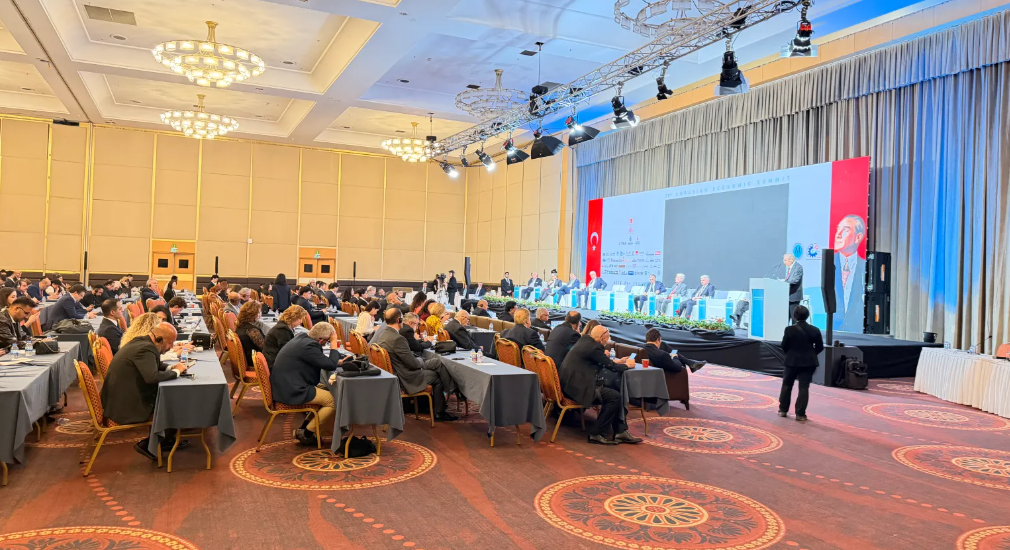
Former Prime Minister of Moldova, Mr. Chiril Gaburici, delivering his address on global responsibility, peace, and humanity during the Eurasian Economic Summit in Istanbul.

## A Timely Reflection in a Fragmented Global Order
The address resonated deeply because it reflected concerns shared across continents.
Today’s international system faces:
- Rising geopolitical competition
- Prolonged regional conflicts
- Polarised political narratives
- Growing militarisation
- Declining trust in institutions
- Economic and humanitarian distress
Yet Mr. Gaburici reminded the audience that humanity’s greatest achievements have historically emerged not from confrontation, but from cooperation.
His speech challenged prevailing assumptions that strength is demonstrated only through coercion or dominance.
Instead, he argued that genuine leadership requires:
- moral courage,
- strategic patience,
- and the willingness to pursue dialogue even amidst disagreement.
## Beyond Politics: A Message for Future Generations
What distinguished his reflections was their emphasis on intergenerational responsibility.
He reminded the audience that the planet is not an inheritance to be consumed recklessly, but a shared trust to be preserved responsibly.
His concluding words carried both simplicity and depth:
“Enough humanity to see this planet not as a battlefield, but as our shared home.”
And further:
“Our responsibility is simple, yet profound: To leave it cleaner. Safer. Healthier. And ultimately, a better place for those who come after us.”
These reflections transcended politics. They spoke directly to the conscience of humanity.
Mr. Chiril Gaburici emphasised that dialogue, equality, and shared responsibility remain indispensable for preserving global peace and stability.

## Asthana Writes: Honoured to Publish These Reflections
At Asthana Writes, we remain committed to encouraging thoughtful strategic dialogue that bridges geopolitics with humanity.
It is therefore a matter of great honour to publish the reflections of Mr. Chiril Gaburici — a statesman whose message rises above immediate politics and speaks directly to the larger future of civilisation itself.
In an age increasingly dominated by division and strategic confrontation, voices advocating Humanity, peace, dignity, and responsible global leadership deserve to be amplified.
His address at the Eurasian Economic Summit serves as an important reminder that humanity’s future will ultimately depend not only on military or economic power, but on our collective wisdom to prioritise peace over confrontation and dialogue over division.