What’s ISI cooking up in Bangladesh? Dhaka’s intel team visits Pakistan, eyes to ‘secure more’ from India
- September 15, 2026
- Posted by: Kshitiz Bhardwaj
- Categories: Bangladesh, India, Pakistan
The visit comes at a politically consequential time for Bangladesh. Dhaka is yet to give New Delhi a clear answer on Prime Minister Tarique Rahman’s possible participation in the Brics summit in September
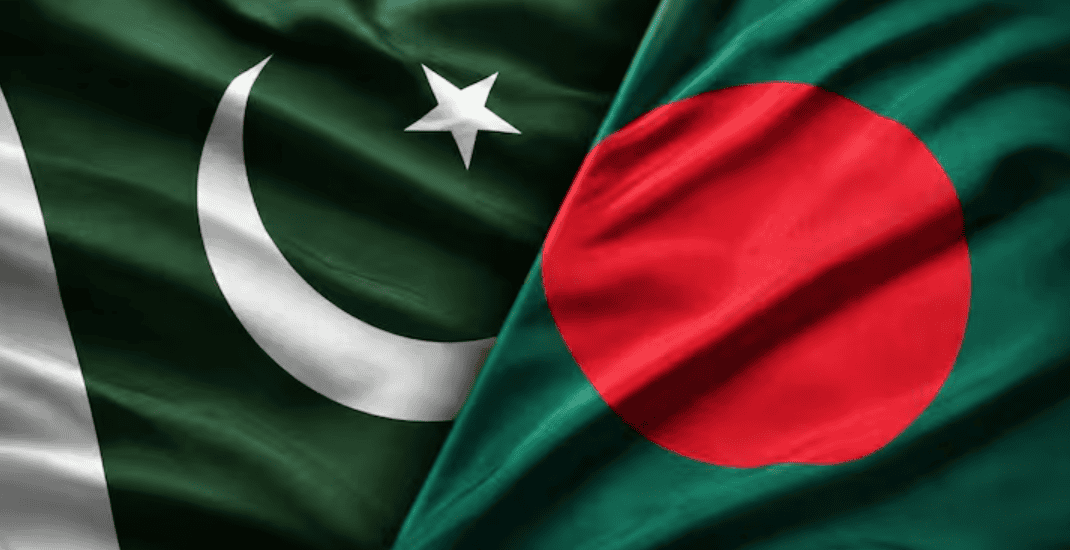
Asix-member delegation of Bangladesh’s military intelligence organisation, the Directorate General of Forces Intelligence (DGFI), travelled to Pakistan on August 15, in the latest sign of deepening security and intelligence engagement between Dhaka and Islamabad.
The delegation was led by Colonel Magfuz-ul-Bari and comprised Wing Commander Imrul Kais, Mohiuddin Mohammad Asif, Squadron Leader Raihan Mohammad Chowdhury, Murad Hossain Tushar and Khandokar Ariful Islam.
The visit comes at a politically consequential time for Bangladesh. Dhaka is yet to give New Delhi a clear answer on Prime Minister Tarique Rahman’s possible participation in the Brics summit in September, despite India extending an invitation even though Bangladesh is not a Brics member.
Against this backdrop, the latest DGFI-Pakistan engagement raises questions over whether Dhaka is recalibrating its strategic options — and how much of that recalibration is aimed at India.
Former Indian ambassador Anil Trigunayat believes Bangladesh’s renewed engagement with Pakistan needs to be viewed through precisely this lens. Speaking to Firstpost, he said Pakistan’s military and ISI “have always been very active in Bangladesh” and found “exceptional outreach” during the Mohammad Yunus-led interim government.
Pakistan-ISI footprint grows after Hasina’s ouster
The August 2024 fall of Sheikh Hasina’s government dramatically altered Bangladesh’s relationship with both India and Pakistan. While ties between New Delhi and Dhaka came under strain, Islamabad moved quickly to expand political, military and intelligence contacts with Bangladesh.
 More from India

India-Bangladesh Ganga treaty expires in December. Dhaka govt eyes ‘guarantee’ clause in new pactBangladesh to hold presidential election today; first contested poll in 35 years
The latest DGFI visit follows a visit by its Director General, Major General Qaiser Rashid Chowdhury, to Islamabad in April 2026, barely a month after he assumed charge of the agency.
The DGFI chief’s Islamabad trip reportedly included meetings with senior Pakistan Army officers and his counterparts in the ISI. Three other DGFI officers accompanied him. Last year too, a DGFI delegation travelled to Pakistan, according to reports.
Trigunayat said Pakistan’s military and ISI “have embedded well” in Bangladesh and suggested that the present government, despite being somewhat pragmatic, is continuing to benefit from the strategic space created by closer ties with Beijing and Islamabad.
Advertisement
“The present regime, even if somewhat pragmatic, is traversing on the same path where strategic advantages from the Sino-Pak axis are being savoured,” he said.
Is Dhaka using Pakistan to gain leverage with India?
This is where Bangladesh’s Pakistan outreach becomes particularly relevant for India.
Dhaka does not necessarily need to choose Pakistan over India to benefit from closer ties with Islamabad. Instead, Pakistan can provide Bangladesh with another strategic lever at a time when its relationship with New Delhi remains unsettled.

 From our shows
 From our shows
BRICS’ All-Veg Menu Controversy: The Surprising Truth About What India Actually Eats | Vantage
Vantage|Published 10 hours ago
Trigunayat believes this could be part of Dhaka’s calculation.
“Dhaka will like to leverage those activities to secure more from India where geography also dictates the reality,” he said.
Geography makes India indispensable to Bangladesh, with the two countries sharing a long border and extensive economic, connectivity and security interests. Experts say that Dhaka may also believe that greater engagement with Pakistan and China gives it additional bargaining power in its dealings with New Delhi.
New Delhi, meanwhile, has continued to signal that it wants to stabilise ties. The Ministry of External Affairs has said India desires “positive, constructive and forward-looking relations” with Bangladesh based on mutuality of interests and reciprocity.
Advertisement
JF-17 talks show Pakistan’s ambitions go beyond intelligence
The expanding intelligence relationship is also taking place alongside growing military cooperation.
In January, the air force chiefs of Pakistan and Bangladesh held talks in Islamabad over a potential agreement involving the sale of Pakistan’s JF-17 Thunder fighter jets to Dhaka. The discussions reflected Islamabad’s broader effort to establish itself as a defence supplier to Bangladesh.
For Islamabad, closer defence ties with Dhaka also offer a strategic opening in India’s eastern neighbourhood.
For Bangladesh, meanwhile, Pakistan can offer access to defence cooperation, military hardware and another channel for balancing its external relationships.
There are also indications of interest in deeper cooperation involving the Saudi-led Mecca Agreement, which Trigunayat said could see Bangladesh further engage with a framework in which Pakistan has a strong role.
India faces a new strategic equation in Dhaka
None of this necessarily means Bangladesh is moving towards a formal anti-India alignment. Dhaka’s economic and geographic dependence on India imposes clear limits on how far its strategic relationship with Pakistan can go.
But the pattern is difficult for New Delhi to ignore.
Since Hasina’s ouster, Pakistan has moved from being a relatively peripheral player in Bangladesh’s security calculus to becoming an increasingly visible interlocutor. Regular intelligence exchanges, senior military contacts and prospective defence cooperation suggest that Islamabad wants these ties to acquire institutional depth.
At the same time, Dhaka appears keen to keep its options open.