Part III: Sheikh Hasina’s Press Conference: Bangladesh at a Strategic Crossroads and the Future of South Asian Geopolitics
- September 5, 2026
- Posted by: By Maj. Gen. Dr. Rajan Kochhar, VSM
- Categories: Geopolitical, South Asia
No Comments
“The supreme art of war is to subdue the enemy without fighting.” — Sun Tzu
- PART 1 LINK- https://majgenrajankochhar.substack.com/p/sheikh-hasinas-press-conference-bangladesh?r=6l0juhPART II LINK- https://majgenrajankochhar.substack.com/p/part-ii-sheikh-hasinas-press-conference?r=6l0juh
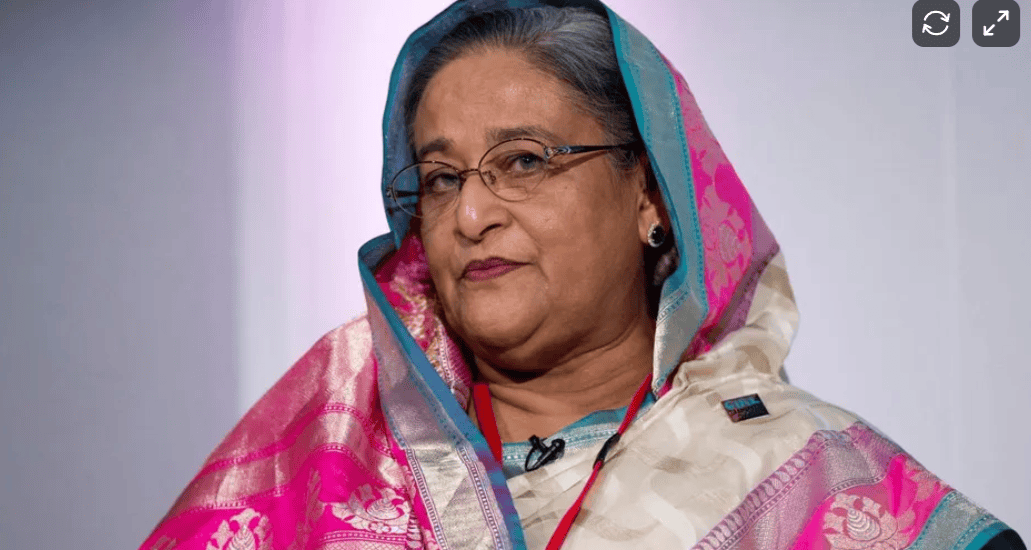
- As Bangladesh navigates one of the most consequential political transitions in its post-independence history, the strategic implications extend well beyond the country’s borders. The contest is no longer confined to electoral politics or leadership change. It is increasingly about the future geopolitical orientation of Bangladesh and its role in shaping the balance of power in South Asia and the Indo-Pacific. Sheikh Hasina’s press conference, therefore, was as much a message to external stakeholders as it was to the Bangladeshi electorate. It sought to reassure supporters, caution adversaries and remind the international community that Bangladesh’s stability has wider regional consequences.
- The United States and Bangladesh: Democracy Meets Strategic CompetitionThe United States views Bangladesh through two complementary lenses. The first concerns democratic governance, human rights, labour standards and the credibility of electoral institutions. The second, and increasingly significant, relates to the Indo-Pacific strategic competition with China.Bangladesh occupies a critical location overlooking the Bay of Bengal, through which some of the world’s busiest sea lanes pass. As Washington seeks to preserve a free, open and rules-based Indo-Pacific, Dhaka assumes greater strategic relevance. At the same time, Bangladesh is the world’s second-largest exporter of ready-made garments and an important contributor to global supply chains. Stability in Bangladesh is therefore viewed as an economic as well as a strategic necessity.This duality explains why American policy has often appeared nuanced. On one hand, Washington has consistently advocated transparent democratic processes and accountable governance. On the other, it recognises that political instability could create opportunities for greater Chinese strategic influence. Consequently, the United States is likely to continue engaging constructively with whichever government commands constitutional legitimacy while encouraging democratic reforms and institutional resilience.
- Pakistan’s Strategic CalculationsPakistan has closely followed political developments in Bangladesh. Although diplomatic relations have gradually improved over the decades, the legacy of the 1971 Liberation War continues to shape public opinion and strategic thinking in both countries.During Sheikh Hasina’s tenure, Bangladesh pursued war crimes trials against individuals accused of atrocities committed during the Liberation War. These proceedings generated considerable diplomatic friction with Islamabad and reinforced Bangladesh’s secular nationalist identity.From Pakistan’s perspective, any political transition that reduces India’s influence in Bangladesh could create opportunities to rebuild political and diplomatic engagement. Islamabad’s approach is unlikely to be overt. Instead, it would probably focus on expanding cultural exchanges, educational contacts, religious organisations and diplomatic outreach while seeking to gradually restore influence lost over the past decade.The objective would not necessarily be to recreate pre-1971 political dynamics—an impossible proposition—but rather to reduce India’s strategic dominance in Dhaka and diversify Bangladesh’s external relationships.The Emerging Terrorist NexusOne of the most serious concerns arising from prolonged political uncertainty is the possibility that extremist organisations may seek to exploit institutional distractions. Bangladesh has made remarkable progress in combating terrorism during the past fifteen years. Decisive operations against organisations such as Jamaat-ul-Mujahideen Bangladesh (JMB), Ansarullah Bangla Team and other extremist networks significantly weakened their operational capabilities and disrupted recruitment pipelines.However, terrorism is an adaptive phenomenon. Extremist organisations often exploit periods of political instability, economic distress and weakened governance to rebuild support structures. Online radicalisation, encrypted communications, illicit financial networks and transnational ideological linkages have transformed the operational environment.Indian security agencies remain particularly alert to any attempt by Pakistan-based terrorist organisations to revive cross-border networks in eastern India. Historical experience demonstrates that insurgent organisations in India’s Northeast once utilised Bangladeshi territory for logistics, shelter and movement. These sanctuaries were systematically dismantled through close cooperation between Indian and Bangladeshi intelligence agencies under Sheikh Hasina’s leadership.Any weakening of this institutional cooperation—even unintentionally—could create opportunities for extremist organisations to test existing security mechanisms.The Rohingya refugee camps in southeastern Bangladesh add another dimension to the security landscape. The overwhelming majority of refugees are victims of persecution and conflict and have no connection with militancy. Nevertheless, international security experts have repeatedly cautioned that criminal syndicates and extremist recruiters may seek to exploit vulnerable populations if governance mechanisms weaken. Sustained vigilance by Bangladeshi authorities, supported by regional intelligence cooperation, remains essential.
- Can Sheikh Hasina Return?The question dominating political discourse is whether Sheikh Hasina can return to power. History offers numerous examples of leaders who appeared politically finished only to stage remarkable comebacks. Political fortunes often change rapidly, particularly when governments fail to meet public expectations.Several factors will influence her prospects. The Awami League remains one of Bangladesh’s strongest and most organised political parties, with a nationwide cadre base and significant administrative experience. Many Bangladeshis continue to associate Sheikh Hasina’s tenure with economic growth, infrastructure expansion, improved social indicators and firm action against violent extremism.Conversely, legal proceedings, changing electoral dynamics, leadership succession within the Awami League and the aspirations of a younger electorate could complicate any immediate return. Much will also depend on the performance of the current political dispensation. If governance deteriorates, inflation rises or economic reforms falter, nostalgia for stability may strengthen Sheikh Hasina’s political appeal.Whether she ultimately returns to office is therefore less important than the broader reality that she is unlikely to disappear from Bangladesh’s political landscape in the foreseeable future. Her press conference itself demonstrated that she intends to remain an active participant in shaping the country’s future.Implications for IndiaIndia’s interests in Bangladesh are rooted in geography, history and security. A stable, prosperous and friendly Bangladesh is indispensable to India’s eastern security architecture.The first priority is maintaining uninterrupted connectivity with the Northeast. Bangladesh provides the shortest and most cost-effective transport routes linking the Indian mainland with the northeastern states. Continued cooperation on railways, inland waterways, coastal shipping and highways will remain strategically important.The second priority is counterterrorism cooperation. Intelligence sharing developed over the past decade has significantly enhanced regional security. Preserving these mechanisms should remain a central objective irrespective of political changes in Dhaka.Third, India must accelerate long-pending initiatives such as the Teesta water-sharing agreement. Unresolved bilateral issues create opportunities for external actors to expand influence. Timely political engagement and pragmatic compromise would reinforce public confidence in the India–Bangladesh partnership.Finally, India should continue expanding economic integration through investments, industrial cooperation, digital connectivity, energy partnerships and people-to-people exchanges. Strategic partnerships are ultimately sustained not merely by governments but by enduring economic interdependence and societal trust.
- The Road AheadBangladesh stands at a defining moment. The decisions taken during the coming months will determine whether the country consolidates its remarkable developmental achievements or enters a prolonged phase of political uncertainty.The ideal outcome would be a peaceful democratic process supported by strong institutions, constitutional governance and inclusive political participation. Such an outcome would preserve investor confidence, sustain economic growth and reinforce Bangladesh’s strategic autonomy amid intensifying great-power competition.For India, the objective should not be to favour any particular political formation but to support a stable, sovereign and prosperous Bangladesh that remains committed to combating terrorism, strengthening regional connectivity and maintaining peaceful bilateral relations.China will continue expanding its economic engagement. The United States will remain invested in democratic stability and Indo-Pacific security. Pakistan will seek opportunities to regain influence where possible. Bangladesh’s leadership will therefore require exceptional diplomatic skill to preserve strategic autonomy while benefiting from engagement with all major powers.
- ConclusionSheikh Hasina’s press conference may eventually be remembered not merely as a political defence but as the opening chapter of Bangladesh’s next strategic phase. It underscored the determination of a leader who believes that her political journey is unfinished while simultaneously highlighting the profound geopolitical importance of Bangladesh in an era of renewed great-power competition.Bangladesh today occupies a unique position at the intersection of South Asia and the Indo-Pacific. Its geography links India’s Northeast to the Bay of Bengal, connects Himalayan river systems with maritime trade routes and places it at the centre of strategic calculations involving India, China, the United States and Pakistan. Political stability in Dhaka is therefore inseparable from regional security.The challenge before Bangladesh is to preserve its sovereignty, strengthen democratic institutions, resist extremist influences and maintain a balanced foreign policy that serves its national interests rather than those of competing external powers.For India, the lesson is equally clear. Geography has made Bangladesh an indispensable strategic partner, and diplomacy must ensure that geography continues to remain an enduring source of cooperation rather than competition.As Sir Winston Churchill observed, “The farther backward you can look, the farther forward you are likely to see.” The history of India and Bangladesh demonstrates that their destinies remain closely intertwined. Their shared future will depend upon mutual trust, strategic patience and an unwavering commitment to regional peace and prosperity.About the AuthorMaj Gen Dr Rajan Kochhar, VSM (Retd) is a distinguished defence and strategic affairs analyst, author and speaker with over four decades of experience in military leadership, national security, defence modernisation and geopolitics. He is a consultant on defence technology, MSMEs and startups and writes extensively on military strategy, Indo-Pacific security, emerging defence technologies and global geopolitical developments. He is a sought-after speaker at national and international forums on defence reforms, strategic affairs and indigenous defence manufacturing. His analyses aim to bridge strategic thought, policy formulation and industry perspectives, contributing to informed public discourse on India’s national security challenges.