100 days of US-Israel-Iran war, but still no deal in sight
- July 14, 2026
- Posted by: admin
- Categories: Iran, Israel, US
By- Tushar Sharma
As Gulf tensions deepen, stalled negotiations risk prolonging conflict and destabilising global economies.
This week marks 100 days of the US-Israel-Iran war. It was planned as “a little incursion” that was expected to wind up within a fortnight or so with the overthrowing of the Ayatollah regime, cheering crowds in the streets of Teheran, and the destruction of Iran’s nuclear and military capabilities. Once the operation was over, the USA would declare ‘MISSION ACCOMPLISHED’, claim part of Iran’s oil as expenses—as they did is Iraq—and depart. Simple.
Instead, it didn’t quite pan out that way. The regime is stronger than before and the Iranian people are united. In spite of crippling losses, the Iranians have demonstrated the resolve to continue fighting. As the war reached its 100-Day mark, the unwelcome milestone was marked by fresh Israeli incursions into Lebanon, leading to Israel and Iran trading direct attacks on each other. Around the same time, the USA lost an AH-64 Apache helicopter near the Straits of Hormuz, with US retaliation striking multiple targets in Iran. Predictably, Iran lashed out by hitting US bases in Jordan, Kuwait and Bahrain. These attacks have broken the sixty-day ceasefire that had held since 07 April, and the war was set to enter an even more dangerous space.
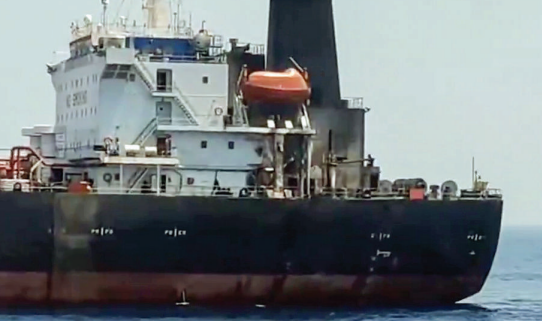
The crux of the matter lies in the deal—or rather the absence of a deal—that Trump hopes to strike with Iran. Iran demands the release of $24 Billion of frozen funds and removal of sanctions that have been imposed upon it for 40 years, in return for a cessation of hostilities—on all fronts, including Lebanon—and the opening of the Straits of Hormuz. After that, talks on its nuclear program can commence. For the USA, it is the other way around. They want Iran to first handover the 440 kilograms of 60%, Highly Enriched Uranium which it holds, and abjure its nuclear and missile program before any other concessions can be made. In the absence of trust, Iran is unlikely to do so without iron-clad guarantees. And as the two sides try to find a middle ground, the Straits of Hormuz remain blocked with Iran imposing control on ships passing through, and the US imposing its own blockade. Three ships, purportedly carrying Iranian oil, have been hit by US missiles which have also killed three Indian seafarers. And as the crucial Straits—through which a fifth of the world’s oil, natural gas and fertilisers pass—remain blocked, global economies spiral and the region remains on edge.
Fortunately, Trump called off plans for renewed US strikes at the last moment claiming a breakthrough in talks “which have been approved by the highest level of Iranian leadership. The Iranians did not confirm any such thing. But Trump is looking for a symbol of victory and by stating that his actions coerced the Iranians into talks, he could just claim it.
All sides want a way out of the war. Iran, in any case, has emerged as the winner by merely holding on for so long. But they are at the end of their tether, with a destroyed navy and air force, and down to just around 22% of their missile stocks. The Middle East nations too, have become collateral damage in this bruising war. Iranian strikes and the instability caused by war, has impacted plans to modernise their economies and emerge as financial and technological hubs of the world. Everyone wants the war to end, but even if it ends tomorrow, it will take at least two years for the region and global economies to get back to normal.
But the spoiler is Israel which has artfully led Trump into this needless war. They have repeatedly stymied any prospect of settlement, by renewed actions in Lebanon and Gaza. Iran links the ceasefire to Lebanon, and each violation frays it further. For Israel, a weakened and diminished Iran is their prime aim, and a prolonged war suits them. Politically too—while Trump seeks early closure before his crucial mid-term elections in November, the survival of Netanyahu’s rabid right-wing government depends on the continuation of hostilities. Israel’s actions now pose a threat to stability of the entire Middle East, including nations such as Saudi and Turkey. Patience is running thin, but it is unlikely that it would stop its actions.
There is another canard behind the needless prolonging of this war. By many accounts, Trump’s companies and business associates have made over 3500 transactions on the stock market, buying and selling as per Trump’s pronouncements, (usually on social media) and using insider knowledge to manipulate the market. There is an even more dangerous motive. Trump boasted that he has siphoned off millions of dollars’ worth of Iranian oil without them ‘even knowing of it,’ and threatening to take over Kharg Island and assume control of Iran’s oil and gas—as with Venezuela. Control of much of the world’s most valuable resource in US hands has dangerous connotations for the world.
The recent pronouncements seem to signal that both parties are edging towards a deal. In all probability, it could just imply the cessation of hostilities and the opening of the Straits of Hormuz, along with an unfreezing of Iranian funds, and continuing talks on its nuclear program. But irrespective of the fine print, it would still help end the war and permit both sides to claim victory.
While one is hopeful that a deal will finally come about, with Trump’s flip-flops, one can never be sure. If it is stymied once again the war could continue interminably in a state of frozen conflict with no permanent end to hostilities. Seeing the manner in which the Russia-Ukraine war—which has now gone on longer than World War I—is unfolding, this seems like a distinct possibility. But while the fallout of the Ukraine war was largely localised, a continuing war in the Gulf will wreak havoc on the world’s economies.
The saving grace is that talks are still continuing. This may still help bring about some sort of compromise solution. But whether it brings a permanent closure or just provides a temporary reprieve remains to be seen. Else the 100-day milestone could lead to an even more dangerous one.
- Ajay Singh is the author of 8 books. An international award-winning writer, he is a recipient of the Rabindranath Tagore Award for Art and Literature, and a regular contributor to “The Sunday Guardian.”