The World at War: Are We Witnessing the Beginning of World War III?
- July 14, 2026
- Posted by: By Maj. Gen. Dr. Rajan Kochhar, VSM
- Categories: Eastern Europe, Europe, Middle East
Introduction: A World on Edge
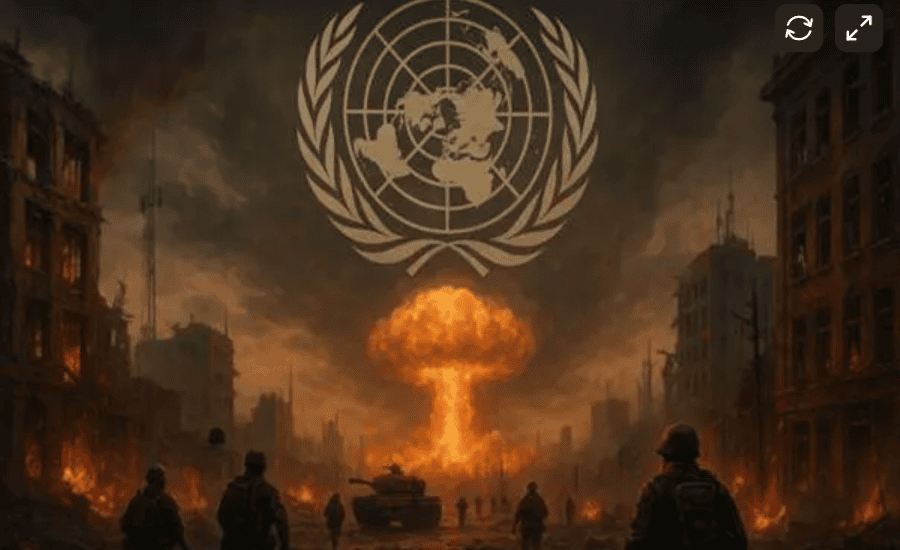
“The lamps are going out all over Europe; we shall not see them lit again in our lifetime.”. When British Foreign Secretary Sir Edward Grey uttered these words in August 1914, few understood that the world was entering an era of unprecedented destruction. Today, more than a century later, a similar sense of foreboding hangs over international affairs. Wars rage in Eastern Europe and the Middle East. Strategic competition between the United States and China has intensified. Nuclear powers confront one another across multiple theatres. The global economy is fragmenting into rival blocs. Technological warfare has transformed battlefields. Cyber-attacks and information warfare blur the line between peace and war.
The question increasingly being asked in diplomatic circles, military headquarters, universities and media platforms is straightforward yet profound: Is the world already experiencing the early stages of World War III?
The answer is neither simple nor definitive. While the world is witnessing the most dangerous geopolitical environment since the end of the Cold War, it is equally true that the current situation differs fundamentally from the conditions that produced the First and Second World Wars. The world today is neither fully at peace nor formally at world war. Rather, it appears to be entering a prolonged era of systemic confrontation in which multiple conflicts are interconnected, major powers compete globally, and escalation risks remain persistently high.
Understanding What Constitutes a World War
History offers useful benchmarks. World War I emerged from a complex web of alliances, nationalism, imperial rivalries and military mobilization. What began as a regional crisis following the assassination of Archduke Franz Ferdinand rapidly engulfed Europe and eventually involved much of the world.
World War II similarly began as a regional conflict driven by revisionist powers seeking to overturn the international order. Within a few years, military operations stretched across Europe, Africa, Asia and the Pacific.
Three characteristics defined both wars. First, the direct participation of multiple major powers in large-scale military combat. Second, the existence of opposing alliance systems. Third, the mobilization of national economies and societies for total war.
By these standards, the current global situation has not yet crossed the threshold into a Third World War. The United States, China, Russia, India and European powers are not directly fighting one another on the battlefield. Most economies remain largely organized for peacetime production. International institutions, despite their weaknesses, continue to function. Yet history also teaches that world wars often begin long before they are officially recognized.
The Ukraine War and the Return of Great Power Conflict
The war between Russia and Ukraine has become the defining geopolitical conflict of the decade.
What initially appeared to be a regional war has evolved into a wider confrontation between Russia and the Western alliance led by the United States and North Atlantic Treaty Organization.
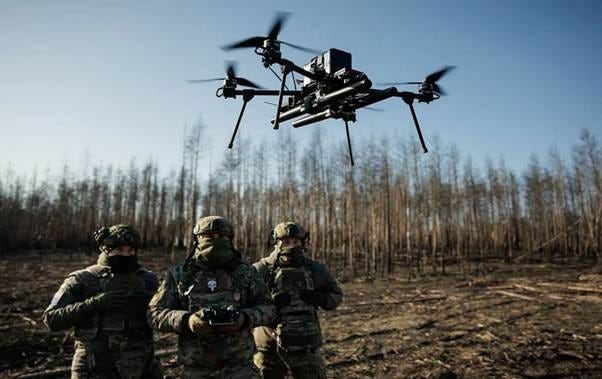
The battlefield extends far beyond Ukraine itself. Intelligence operations, economic sanctions, cyber warfare, technological competition and information campaigns have become integral components of the conflict.
The war has exposed a fundamental reality: major-power competition has returned as the organizing principle of international politics.
The conflict has also shattered assumptions that interstate wars between industrialized nations belonged to history. Trench warfare, artillery duels, drone swarms and strategic missile attacks now dominate headlines once again.
Perhaps most concerning is the nuclear dimension. Russian leaders have repeatedly signalled their willingness to consider nuclear options should existential threats emerge. The resulting deterrence dynamics resemble some of the most dangerous moments of the Cold War.
The Middle East: Expanding Arc of Instability
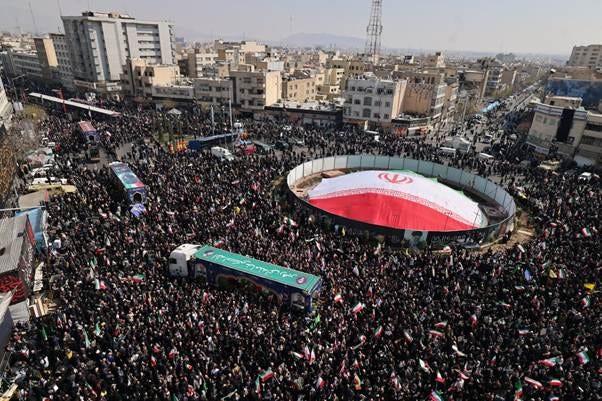
The Middle East represents another major flashpoint. The confrontation involving Israel, Palestinian factions, Iran and various regional actors has expanded dramatically over recent years.
The strategic geography is alarming. The region contains critical maritime chokepoints including the Strait of Hormuz and the Bab el-Mandeb. Disruption in either location affects global energy markets and international trade. Iran’s “Axis of Resistance” strategy seeks to create a security belt stretching from the Persian Gulf to the Mediterranean and the Red Sea. Meanwhile, Israel views Iranian regional influence as an existential challenge.
American military involvement, although more limited than in previous decades, remains substantial. Any direct confrontation between Washington and Tehran could rapidly draw in multiple regional and global actors. The Middle East therefore functions as a potential escalation zone where local conflicts can quickly acquire global significance.
The Rise of China and the Taiwan Question
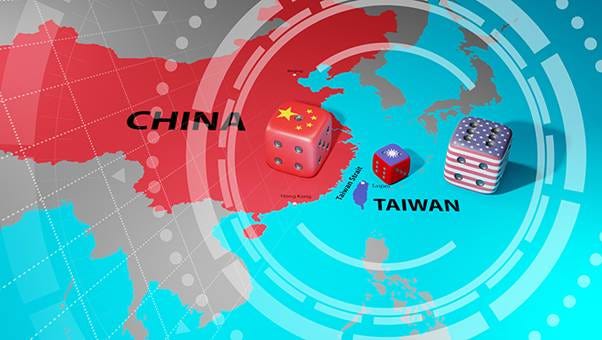
If there is one issue most likely to determine whether the twenty-first century experiences a world war, it is Taiwan. The competition between the United States and the China increasingly resembles a classic struggle between an established power and a rising challenger.
The ancient Greek historian Thucydides observed that the rise of Athens and the fear this created in Sparta made war inevitable. Contemporary scholars refer to this phenomenon as the “Thucydides Trap.” China’s rapid economic growth, military modernization and expanding global influence have altered the balance of power in Asia. Beijing views Taiwan as a core national interest and an unfinished chapter of Chinese history. Washington, meanwhile, sees Taiwan as essential to maintaining a favourable balance of power in the Indo-Pacific.
Any military confrontation over Taiwan would likely involve not only China and the United States but also regional powers such as Japan and potentially Australia. Unlike previous conflicts, a Taiwan war would immediately affect global semiconductor production, international trade networks and financial markets. The consequences would be worldwide.
The New Cold War
Many analysts argue that the current era more closely resembles the Cold War than the world wars. A loose alignment involving China, Russia, Iran and North Korea increasingly challenges a Western bloc led by the United States and its allies.
The similarities are striking. Economic sanctions replace blockades. Cyber-attacks substitute for sabotage. Artificial intelligence competes alongside nuclear deterrence. Space becomes a contested domain. Information warfare target’s public opinion.
Unlike the Cold War, however, today’s rival powers remain deeply interconnected economically. China and the United States remain major trading partners despite growing tensions. This interdependence creates both stability and vulnerability. It reduces incentives for direct war while increasing opportunities for coercion through economic means.
Technology and the Transformation of Warfare
Future world wars may not resemble those of the twentieth century. “The next war may be won not by the side with the largest army but by the side with the smartest algorithms.” Artificial intelligence, autonomous systems, cyber weapons and space-based capabilities are transforming military power.
The Ukraine conflict has demonstrated the effectiveness of relatively inexpensive drones against expensive conventional systems. Swarms of autonomous platforms may increasingly dominate future battlefields.
Cyber warfare introduces new dangers. A coordinated attack on financial systems, power grids or communication networks could cripple entire nations without a single shot being fired.
Space has emerged as another contested frontier. Satellites support communications, navigation, intelligence and missile warning systems. Their destruction could have catastrophic global consequences. The integration of these technologies means that future conflicts may escalate more rapidly and unpredictably than historical wars.
Nuclear Deterrence: The Great Barrier Against World War III
The strongest argument against an imminent Third World War remains nuclear deterrence. During the Cold War, the doctrine of mutually assured destruction prevented direct military confrontation between the United States and the Soviet Union. The logic remains relevant today. Any large-scale war involving major nuclear powers carries the risk of civilization-ending consequences. This reality influences strategic decision-making in Washington, Moscow, Beijing, New Delhi and other capitals.
Nuclear weapons create what strategist Bernard Brodie famously described as a condition in which the chief purpose of military establishments becomes preventing wars rather than fighting them. Paradoxically, the existence of nuclear weapons may be one reason why major powers increasingly engage through proxies, cyber operations and economic pressure rather than direct combat.
India in an Era of Global Turbulence
For India, the emerging international environment presents both risks and opportunities. India faces a complex strategic landscape involving China, Pakistan, maritime competition in the Indian Ocean and broader geopolitical shifts. New Delhi has pursued a policy of strategic autonomy, maintaining relationships with multiple power centres while avoiding formal alliance commitments. This approach provides flexibility amid increasing global polarization.
India’s growing economic strength, demographic advantages and military modernization position it as a pivotal power in any future international order. Should global rivalry intensify further, India’s role as a balancing power could become even more significant. The challenge will be preserving strategic independence while navigating increasingly hostile geopolitical currents.
Scenarios for the Future
Several possible trajectories emerge over the next decade. The most optimistic scenario involves managed competition. Rival powers continue competing but avoid direct military confrontation. Regional conflicts remain contained. Economic interdependence survives despite fragmentation.
A second scenario involves a prolonged global cold war. Strategic rivalry deepens, blocs become more rigid and proxy conflicts multiply. This path resembles a twenty-first century version of the Cold War.
A third scenario involves a regional conflict triggering broader escalation. Taiwan, the Middle East or Eastern Europe could become catalysts for wider confrontation. This represents the greatest immediate danger.
The most catastrophic scenario involves direct military conflict between major nuclear powers. Although still unlikely, the consequences would be unprecedented.
Conclusion: Neither Peace nor World War
The world today occupies an uncomfortable middle ground between peace and global war. We are not yet witnessing World War III in the conventional sense. There is no global military confrontation involving all major powers. No coalition armies are clashing across continents. No governments have fully mobilized their societies for total war.
Yet it would be equally mistaken to describe the current international environment as stable. The world is entering what may be called an age of permanent strategic competition. Multiple conflicts overlap. Rival alliances harden. Military spending rises. Technological disruption accelerates. Trust among major powers declines.
The danger lies not in a single dramatic event but in the cumulative interaction of numerous crises.
History rarely repeats itself exactly. World War III, if it occurs, is unlikely to resemble World War I or World War II. It may begin through cyber-attacks rather than artillery barrages, through economic warfare rather than naval blockades, through drones and algorithms rather than massed armies.
The central question is therefore not whether World War III has already begun. The more important question is whether the world’s leaders can manage intensifying rivalries without allowing them to spiral into direct confrontation.
As the historian A.J.P. Taylor once observed, “Wars are not inevitable. They are the result of decisions.” The future international order will ultimately depend on whether those decisions are guided by strategic restraint or geopolitical ambition. The world is certainly closer to great-power confrontation than at any time since the Cold War. But it has not yet crossed the point of no return. The coming decade will determine whether humanity remains in an era of dangerous competition—or enters a new world war whose consequences could eclipse all previous conflicts.
Top of Form
Bottom of Form