Resetting India-ASEAN Trade in 2025
- October 28, 2025
- Posted by: Ambassador Gurjit Singh
- Categories: ASEAN & ARF, India
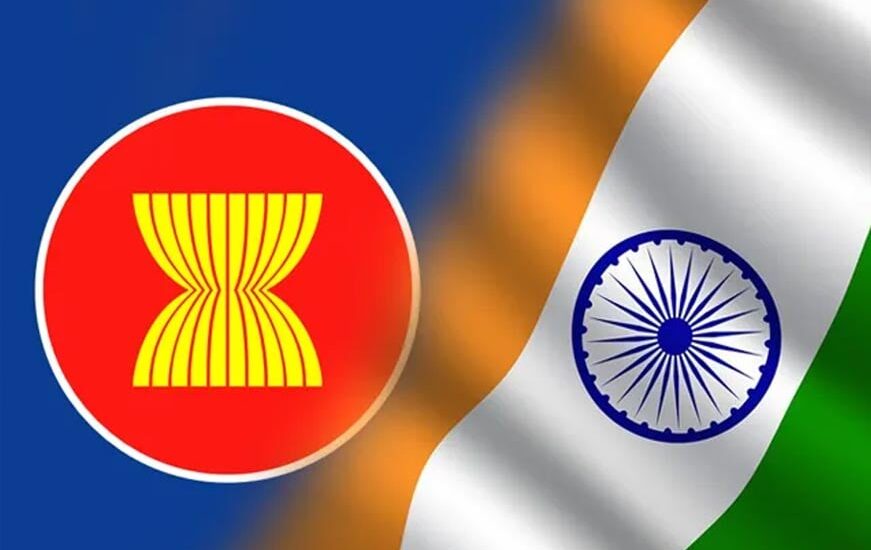
India-ASEAN ties face a widening trade gap, but the 2025 review offers a chance to rebalance economics with a deeper strategic partnership
The Kolkata Combined Commanders’ Conference marks a historic leap for India’s armed forces, with the launch of mainland joint stations and a tri-service Education Corps. These reforms signal a decisive shift toward theatre commands, unified logistics, and seamless integration across land, sea, air, cyber, and space domains.
The recent Combined Commanders’ Conference in Kolkata marks a historic turning point for the Indian Armed Forces. The decisions made at this forum are not just routine adjustments but strategic milestones. The establishment of three new joint military stations on the mainland, the creation of a common Education Corps, and a commitment to transformative reforms across the Army, Navy, and Air Force represent a deliberate move away from service-specific silos toward true jointness. For decades, the Andaman & Nicobar Command has been the sole tri-service experiment, often more symbolic than structural. The expansion of joint stations to the mainland is not just a logistical change; it signals that India is ready to reorganise its warfighting infrastructure for the 21st century.
7 Fatal Flaws in Military Theaterisation
The Rush to Restructure
Cart before the horse syndrome
India’s military reforms are focusing on command structures before establishing proper integration fundamentals. This backward approach risks creating hollow commands.
Jointness is no longer just a buzzword; it has become a crucial element of warfighting. In an era where battles occur across multiple domains, land, sea, air, space, cyber, and the electromagnetic spectrum, India’s military must be able to integrate its strengths smoothly.
The creation of a tri-service Education Corps, for example, goes beyond workforce rationalisation; it acknowledges that intellectual capital must be shared, standardised, and aligned with national goals. The next logical step is to expand this integration into operations, logistics, and training, ultimately leading to fully operational theatre commands.
Why Theatre Commands Matter
The concept of theatre commands is rooted in the principle that wars are fought by missions, not by individual services. The current structure, where each service operates its own regional commands, creates duplication of effort, slows decision-making, and fragments the kill chain. In modern high-tempo warfare, these inefficiencies can be fatal.
A theatre command system allows for unity of command, economy of force, and concentration of effort. Each theatre commander would have operational control over all forces, land, air, and naval within the theatre, enabling integrated planning and execution. This is particularly crucial for India, which faces three active fronts: the northern and western borders with China and Pakistan, respectively and in the East, Bangladesh. The simultaneous and coordinated employment of air power, artillery, ground manoeuvre, and maritime assets could provide a decisive advantage.
Moreover, theatre commands are not just about kinetic warfighting. They are about deterrence signalling. A unified, combat-ready posture across services is a message to adversaries that India can impose costs swiftly and proportionately across multiple domains. This strengthens strategic stability by making any misadventure prohibitively expensive.
The Emerging Mainland Joint Commands
While the exact locations and mandates of the proposed mainland joint stations have not yet been made public, their potential roles are promising. They are likely to serve as hubs for: –
- Joint planning and force integration. Aligning operational plans across services and building interoperable doctrines.
- Training and education. The Education Corps houses the tri-service and conducts a joint curriculum for officers and enlisted personnel.
- Technology and innovation centres. Incubating solutions in cyber, space, AI-enabled decision-making, and networked warfare.
- Logistics and sustainment nodes. They are becoming focal points for inventory pooling, repair & recovery, and supply-chain resilience.
These stations could act as precursors to full-fledged theatre headquarters, allowing India to transition incrementally without disrupting existing command hierarchies overnight.
Tri-Service Education Corps: Building Intellectual Jointness
The merger of the Army Education Corps into a tri-service Education Corps is a visionary move. Education is where culture is shaped – and culture has been one of the most significant barriers to jointness. Officers and soldiers traditionally grow up thinking in service-specific terms, with limited cross-domain exposure until higher command courses. By introducing joint training early, particularly for Agniveers and junior leaders, India can foster a generation that thinks purple (joint) rather than olive, white, or blue.
Joint education should include: –
- Common foundational training for Agniveers, focusing on discipline, physical conditioning, and basic military skills before branching into specialised service training.
- Tri-service tactical exercises at the sub-unit level to inculcate habits of inter-service cooperation.
- Shared professional military education with standard modules on strategy, logistics, cyber, and information warfare.
- Exchange postings for instructors to break down silos and cross-pollinate expertise.
The long-term payoff will be an officer corps capable of seamlessly integrating air, land, and maritime power in planning and execution.
Logistics and Resource Synergy: The Hidden Force Multiplier
Operational success in modern war is as much about logistics as about tactics. India’s current system still maintains separate supply chains, depots, and maintenance echelons for the three services. This results in duplication of inventories, slow response times, and underutilisation of resources. A theatreised logistics system could create a single window for demand forecasting, procurement, stocking, and distribution.
Key reforms could include:
Joint Logistics Nodes (JLNs). Each theatre should have JLNs responsible for all classes of supply – fuel, ammunition, spares, and rations.
Integrated Maintenance Facilities. Cross-training technicians to maintain common platforms (e.g., trucks, light weapons, communications equipment) regardless of service origin.
Standard Inventory Management Systems. Utilising AI-enabled predictive algorithms to minimise waste and ensure timely delivery.
Centralised Procurement. Leveraging economies of scale to negotiate better rates for spares, lubricants, and consumables.
Such reforms will not only improve wartime readiness but also free up significant budgetary resources that can be diverted to capability enhancement, ensuring a more robust and modernised armed forces in the future.
Joint Training of Agniveers: A Logical Next Step
With the Agnipath scheme (a recruitment and training program in the Indian military) reshaping the recruitment landscape, India has a unique opportunity to standardise initial training across services. A Joint Agniveer Training Centre (JATC) could impart: –
- Common military orientation. Drill, weapons handling, fieldcraft, and values training.
- Exposure to all service environments. Allowing recruits to make informed choices about service allocation.
- Early indoctrination into joint operations. Familiarity with the idea that in battle, they will fight alongside airmen and sailors.
This would not only improve cohesion during future joint operations but also build a sense of shared purpose among the next generation of soldiers.
Operational Synergy: From Tactical to Strategic Level
Integration must go beyond logistics and education to operational planning and execution. Theatre commands should have dedicated Joint Operations Centres (JOCs) equipped with real-time ISR (Intelligence, Surveillance, Reconnaissance) feeds, AI-based decision support, and secure communications linking all echelons. This will enable: –
- Faster decision-making cycles, compressing the OODA (Observe-Orient-Decide-Act) loop.
- More effective use of scarce assets, for example, optimising the use of AWACS, mid-air refuellers, and missile regiments.
- Coordinated fire plans, ensuring artillery, air strikes, and naval gunfire are synchronised for maximum impact.
- Flexible force allocation reallocates reserves and resources between sectors based on real-time threat changes.
Challenges on the Road to Jointness
Transformations of this scale are never frictionless. Some challenges include: –
Service Rivalries. Each service fears losing its identity and operational independence.
Command & Control Concerns. Questions remain about who will lead theatre forces – a rotational model or a permanent joint staff?
Legislative Backing. Clear legal frameworks may be needed to define authority, budget control, and accountability.
Infrastructure Costs. Establishing new joint commands, logistics hubs, and training facilities requires significant capital investment.
Mindset Change. Perhaps the most challenging aspect is that jointness must be viewed not as a zero-sum game but as a force multiplier.
These challenges are surmountable with political will, empowered leadership, and phased implementation.
Recommendations for the Way Forward
Appoint a Chief of Defence Staff (CDS) led Joint Implementation Authority with a fixed timeline for rolling out theatre commands.
Start with Low-Hanging Fruit. Joint logistics and training can be implemented relatively quickly to build confidence.
Pilot Projects. Create one theatre command on each front (Northern, Western) and refine the model before nationwide rollout.
Invest in Technology. A robust digital backbone is critical for seamless information flow across services.
Legislate Joint Doctrine. Ensure that jointness survives changes in leadership and political cycles.
Conclusion: Towards a Joint Warfighting Culture
India’s military stands at the cusp of a generational transformation. The decisions taken at the Kolkata Combined Commanders’ Conference are more than administrative announcements; they are the foundation stones of a future-ready joint force. Creating theatre commands, integrating logistics, and training the next generation of soldiers together will create a military machine capable of delivering decisive outcomes in war – and maintaining credible deterrence in peace.
The road will be long, and there will be institutional resistance. But the prize is worth it: a leaner, meaner, and more agile Indian Armed Forces, capable of defending the nation across multiple domains with seamless synergy. As military professionals, defence analysts, and strategic planners, it is incumbent upon us to champion these reforms, critique them where necessary, and help shape a joint warfighting culture that reflects the demands of the modern battlefield.
India’s tryst with jointness has begun. The steel must now be forged.
As the AEP marked its tenth anniversary in 2024 and the India-ASEAN Dialogue Partnership reached 30 years in 2022, the relationship has now reached the level of a Comprehensive Strategic Partnership. However, while India pursues FTAs with the United Kingdom, European Union (EU), the United States (US), Australia, and the United Arab Emirates (UAE), frustration is mounting over the slow progress in reviewing the ASEAN-India Trade in Goods Agreement (AITIGA) due this year. Concerns persist over widening trade deficits and suspicions that some ASEAN countries serve as conduits for re-routed Chinese exports.
The ASEAN-India Trade in Goods Agreement (AITIGA), signed in 2009 and implemented in 2010, was envisioned as a catalyst for deeper economic integration between the two rapidly growing regions. Yet, more than a decade later, its outcomes invite growing scrutiny, particularly due to the widening trade imbalance that disproportionately benefits the ASEAN region.
The ASEAN-India Trade in Goods Agreement (AITIGA), signed in 2009 and implemented in 2010, was envisioned as a catalyst for deeper economic integration between the two rapidly growing regions.
Between FY 2009 and FY 2023, India’s imports from ASEAN surged by 234.4 percent, while its exports to the bloc increased by only 130.4 percent. Consequently, India’s trade deficit with ASEAN widened from US$7.5 billion in 2011 to approximately US$44 billion in 2023. These figures underscore a growing asymmetry that challenges the original promise of shared prosperity. As India-ASEAN continue their review of the AITIGA in 2025, a closer examination of the trends, concerns, and emerging opportunities is both timely and essential.
Understanding the Trade Disparity
At its core, the widening trade deficit reflects the limited market access Indian producers have secured in ASEAN compared to what their ASEAN counterparts enjoy in India. Countries such as Indonesia, Malaysia, Thailand, and Vietnam have capitalised on India’s large and growing consumer base, particularly in sectors like electronics, palm oil, rubber, chemicals, and machinery.
On the other hand, India’s exports, dominated by petroleum products, automobiles, pharmaceuticals, and engineering goods, have faced multiple non-tariff barriers in ASEAN markets. These include stringent standards, regulatory hurdles, and delays in customs procedures, which have collectively constrained India’s export potential.
Furthermore, while tariff liberalisation under AITIGA has reduced or eliminated duties on a wide range of products, the benefits have not been equally distributed across sectors. Indian SMEs, in particular, have struggled to compete with ASEAN’s more integrated production networks and efficient logistics infrastructure. This imbalance has sparked a growing discontent within the Indian industry that the current framework of AITIGA needs re-evaluation.
Impact on Domestic Industry and Policy Reactions
The Indian government has acknowledged concerns raised by domestic stakeholders, especially from sectors such as agriculture, dairy, textiles, and manufacturing. These industries contend that liberalised imports from ASEAN, particularly the cheaper, mass-produced goods, have undermined local production and employment.
This has led to a more cautious trade posture in recent years. In 2019, India opted out of the Regional Comprehensive Economic Partnership (RCEP), citing concerns over a similar trade imbalance, particularly with China. The experience with AITIGA undoubtedly informed this decision. While ASEAN remains a trusted partner, the growing trade gap underscores the need to safeguard national economic interests while remaining committed to regional cooperation.
India opted out of the Regional Comprehensive Economic Partnership (RCEP), citing concerns over a similar trade imbalance, particularly with China.
India has since signalled its intent to renegotiate certain provisions of AITIGA. The review featured prominently in PM Modi’s address at the India-ASEAN Summit in Lao PDR, where he emphasised the importance of addressing non-tariff barriers and seeking reciprocal market access.
ASEAN’s Position and Strategic Calculations
From ASEAN’s perspective, India is a valuable partner, not just economically, but also strategically, amid intensifying geopolitical contestation in the Indo-Pacific. However, for many ASEAN members, India still ranks relatively low as an export destination compared to China, the US, Japan, or the EU.
This means that ASEAN states may have limited incentive to revise the agreement unless there is a clear convergence of political and economic interests. Moreover, ASEAN’s own integration through the ASEAN Economic Community (AEC) enables member states to benefit from regional supply chains, thereby reducing their dependency on any single external partner.
India will need to make a compelling case that a rebalanced agreement will benefit both sides. This includes highlighting complementarities in emerging sectors, such as digital trade, pharmaceuticals, health technology, clean energy, and education services, where Indian capabilities align with ASEAN development goals.
Leveraging India’s Strengths in the Review
For India, the 2025 review represents an opportunity to recalibrate its engagement with ASEAN by playing to its strengths and addressing long-standing challenges. Some key focus areas could include:
- Non-Tariff Barriers (NTBs): India must push for a transparent mechanism to address NTBs, particularly in sectors like pharmaceuticals and agricultural products. Mutual recognition agreements (MRAs) on standards and certifications could help Indian exporters gain smoother access to ASEAN markets.
- Rules of Origin (RoO): India has faced issues with misuse of ASEAN’s RoO provisions, especially where goods from non-ASEAN countries are routed through ASEAN members to benefit from lower tariffs. Tighter and clearer RoO criteria can prevent circumvention and ensure that genuine ASEAN-India trade flows are promoted. RoOs under ASEAN FTAs with others are often softer than with India.
- Services and Investment: India’s competitive edge lies in services, especially IT, financial services, health, and education. The India-ASEAN Trade in Services and Investment Agreements, which came into force in 2015, remain underutilised. Expanding these frameworks to cover digital trade, fintech, and mobility of skilled professionals will benefit both regions.
- Supply Chain Resilience: India and ASEAN share an interest in reducing overdependence on single-country supply chains, especially in the aftermath of the COVID-19 pandemic and ongoing geopolitical tensions. Collaborative investment in resilient and diversified supply chains in electronics, semiconductors, and critical minerals could be a win-win.
- Sustainability and Green Growth: India’s growing focus on green technologies and ASEAN’s vulnerability to climate change offer scope for a shared agenda on sustainable development. Joint ventures in solar energy, electric mobility, and climate-smart agriculture could strengthen the partnership.
Toward a Balanced, Future-Ready FTA
As India undertakes the 2025 review of the AITIGA, it must balance pragmatism with ambition. While the current agreement has facilitated greater trade flows, the benefits have been skewed. The next phase of engagement must correct this imbalance by emphasising quality over quantity in trade, building institutional trust, and aligning economic integration with strategic convergence.
The review should not be seen merely as a course correction but as an opportunity to reimagine the bilateral economic partnership. As two of the most dynamic regions in the Indo-Pacific, India-ASEAN have much to gain by aligning their trade priorities with 21st-century realities: digitalisation, sustainability, inclusive growth, and strategic autonomy.
The next phase of engagement must correct this imbalance by emphasising quality over quantity in trade, building institutional trust, and aligning economic integration with strategic convergence.
It must be acknowledged that, despite its shortcomings, India-ASEAN trade has grown sixfold over the past two decades. Today, ASEAN is a key partner for India, with bilateral trade exceeding US$120 billion and investments of a similar magnitude. The bloc ranks among India’s top five trading partners, alongside the US, China, UAE, and the EU. In this context, public criticism of ASEAN during ongoing trade negotiations risks being counterproductive. Frequent high-level statements from India have reportedly led to discomfort among ASEAN negotiators and risk undermining the negotiation atmosphere.
Despite differences, progress has been made in the ASEAN-India Trade in Goods Agreement (AITIGA) review. The virtual meeting between India’s Commerce Minister, Piyush Goyal, and Malaysia’s Economy Minister, Tzafrul Aziz, appears to have brought negotiations back on track. ASEAN’s US$3.5 trillion economy offers market access to over 600 million people. Indian exports such as pharmaceuticals, automobiles, and electronics enjoy tariff-free access but face non-tariff barriers and uneven market openness: Indonesia, for example, offers only 44 percent access. Moreover, the underutilisation of AITIGA by Indian industries, contrasted with Japanese and Korean supply chains operating from India, points to a need for domestic reforms and improved competitiveness rather than placing blame solely on ASEAN.
India has a significant workforce in ASEAN, especially in digital and service sectors, which are often overlooked unless highlighted by crises like cybercrime-related detentions. Additionally, Indian firms actively raise capital in Singapore’s bond market and, in Malaysia, access low-cost finance through conventional and Islamic bond instruments, deepening economic interdependence.
From Trade Imbalance to Strategic Symmetry
The trade deficit that India faces with ASEAN is not just a statistical concern; it is emblematic of a broader asymmetry in the relationship that needs redress. A rebalanced agreement would enable India to protect its domestic industries while enhancing exports in high-growth sectors. For ASEAN, a stronger Indian economy integrated with its own would provide a counterbalance in a multipolar Asia.
Given the state of the world, partnerships of South-South like that between India and ASEAN need to be strengthened rather than allowed to fester.
Ultimately, the success of the 2025 FTA review will depend on whether both sides can move from transactional trade negotiations to a transformational economic partnership. Such a shift requires political will, business confidence, and a shared vision of a free, open, and inclusive Indo-Pacific.
Gurjit Singh has served as India’s ambassador to Germany, Indonesia, Ethiopia, ASEAN and the African Union.