1 Topic 6 QuestionsShivshakti, Mahadev, Sindoor – what’s in a military operation’s name:Codenames, war cries in army battalions; who decides these?
- August 27, 2025
- Posted by: admin
- Categories: India, Jammu & Kashmir, Kashmir, Pakistan
Anjali Rajgovind
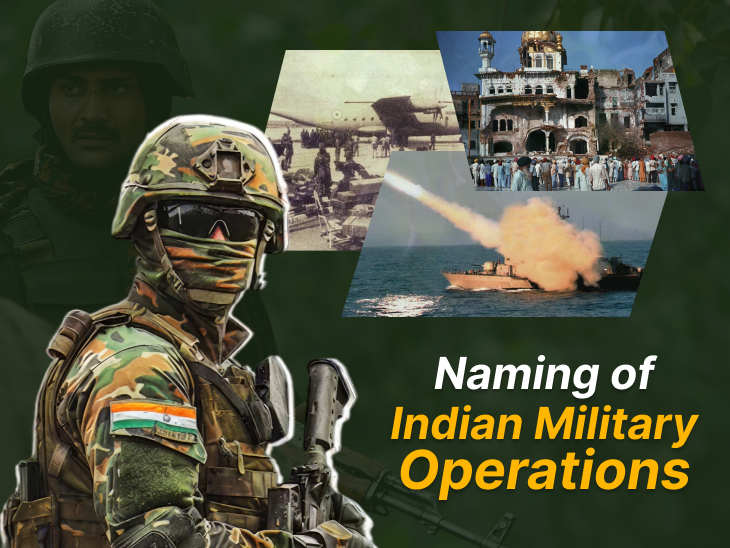
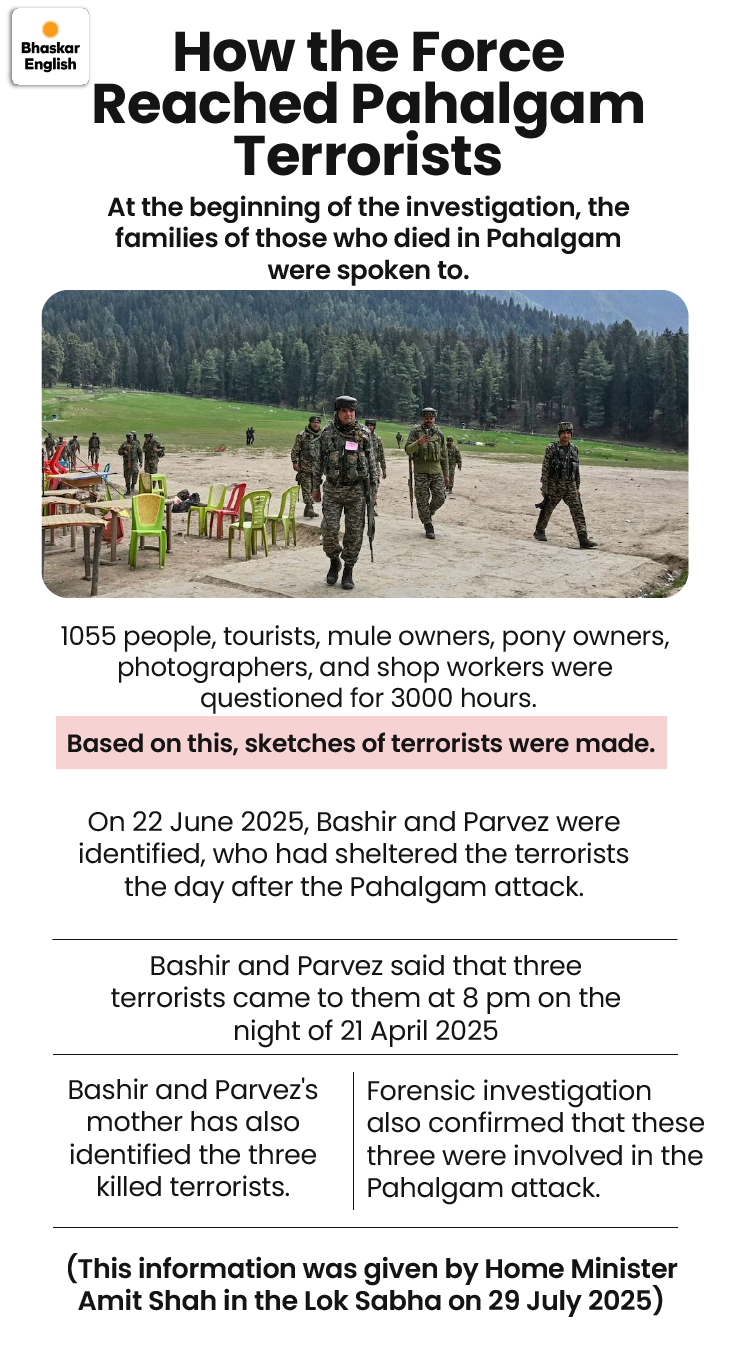
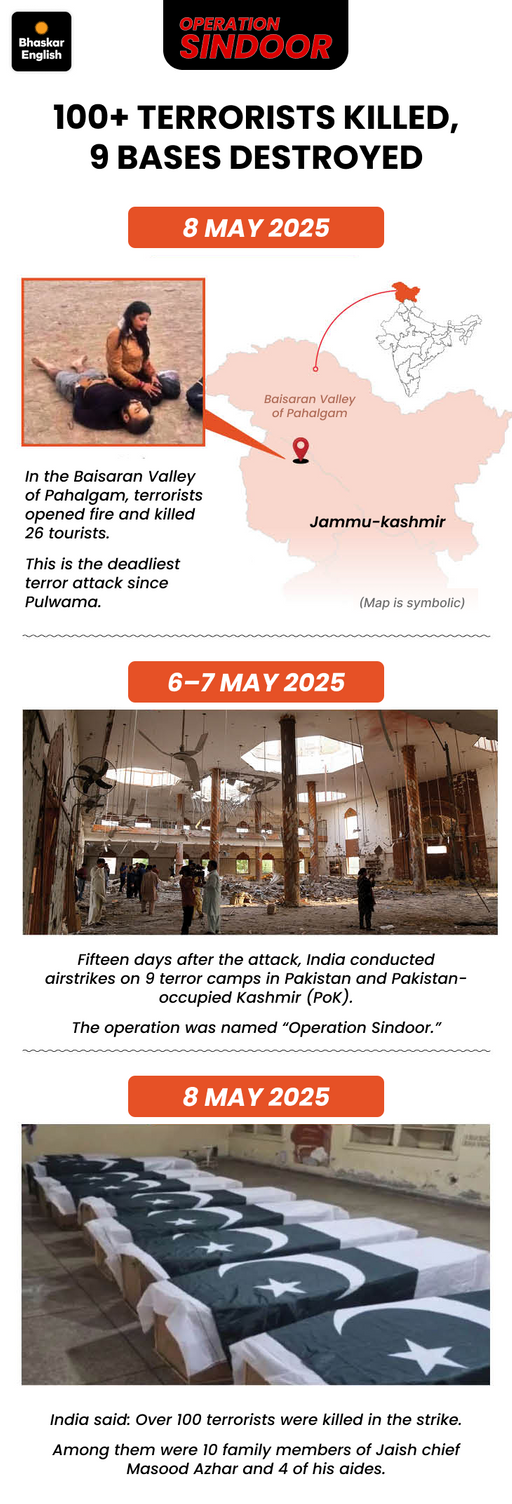
In the weeks following the Pahalgam terror attack, India carried out multiple counter-operations: Operation Sindoor, Operation Mahadev, and Operation Shivshakti.
Though not back-to-back, each bore a distinctive name with strong cultural or spiritual undertones. Their titles quickly drew public interest, prompting debates around symbolism, troop morale, and political messaging.
Why were all three named after deities or emotionally charged symbols? Was this tradition, strategy, or sentiment?
Bhaskar English spoke to Lt Col JS Sodhi (Retd), an army veteran and defence commentator, to understand how India names its military operations, and why those names matter both tactically and emotionally.
How are names of military operations determined in India?
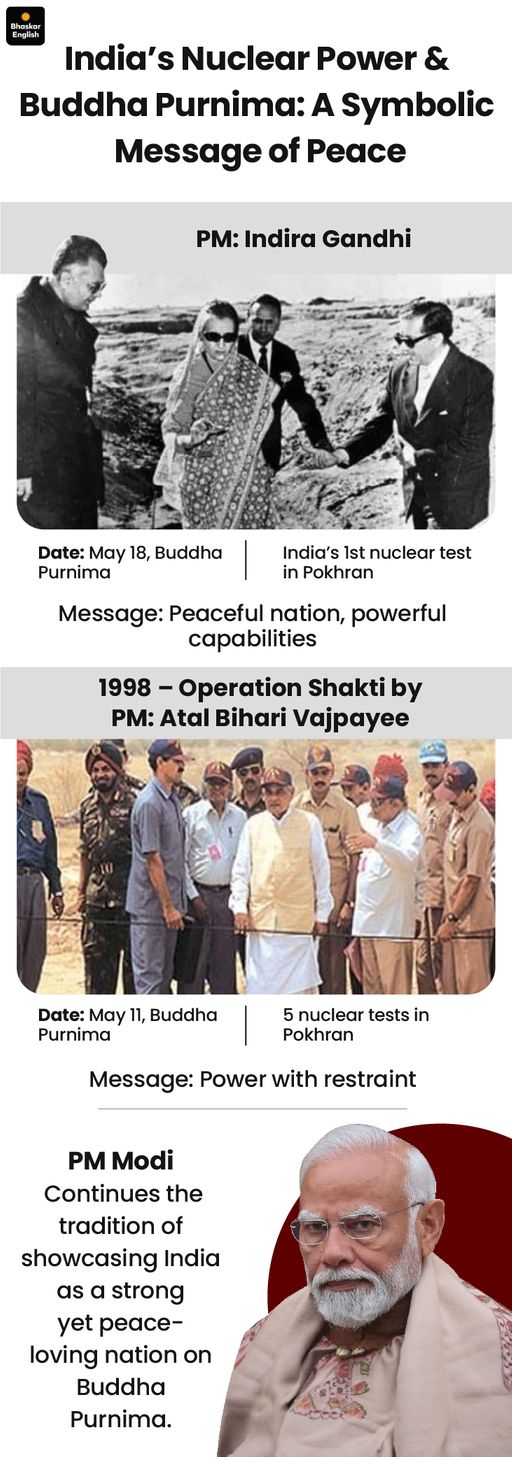
There is no fixed policy for naming military operations in India, Lt Col Sodhi explains.
- The process varies depending on the level of the formation planning it.
- At the unit or brigade level, the naming is usually done by the formation itself and sent up the chain for approval.
- At higher levels, such as command or service headquarters in New Delhi, the names are often finalised in consultation with top defence leadership and occasionally the Defence Minister.
- According to Lt Col Sodhi, the names aim to reflect the context and purpose of the mission.
- For instance, Operation Sindoor, launched after the Pahalgam killings, was named by the Prime Minister himself.
- It referenced the red vermilion (sindoor) worn by married Hindu women, symbolising the widowing of the women who lost their husbands in the Pahalgam attack.
- The name was not religious, he emphasises, but deeply emotional and culturally rooted.
- In general, naming remains a mix of command discretion, symbolic relevance, and operational messaging.
Why were recent operations named after deities?
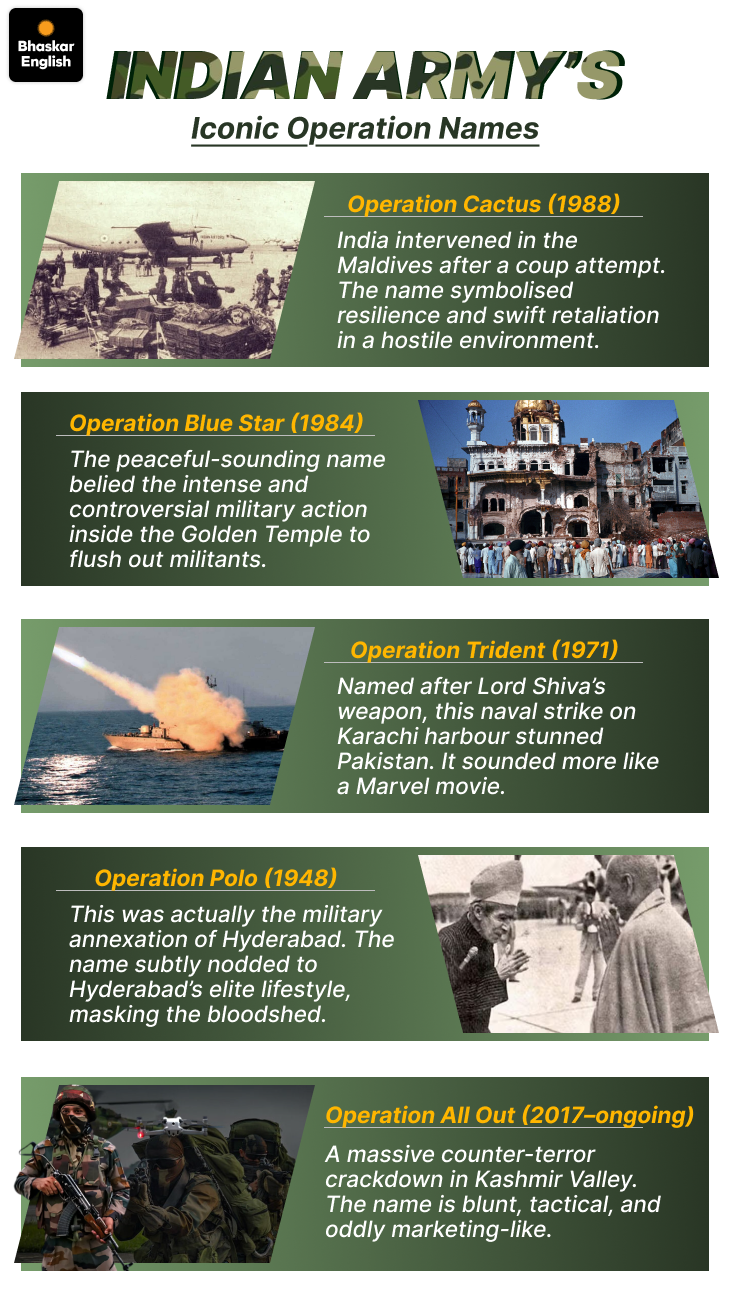
The use of names like Mahadev and Shivshakti has drawn attention, but Lt Col Sodhi is quick to clarify: there’s no communal motive.
- Operation names often reflect the religious makeup of the units involved.
- For example, in Lt Col Sodhi’s own Bombay Sappers regiment, which comprises 37% Marathas (Hindus), 37% Sikhs, 18% Muslims and 8% others, operations might be named after a deity from any of these faiths, depending on the personnel leading the mission.
- Such naming isn’t prescriptive, it’s contextual.
- When a battalion with a majority of Hindu troops conducts an operation, naming it Shivshakti may simply reflect the cultural frame of reference of the unit.
- Lt Col Sodhi stresses that India’s armed forces uphold religious harmony.
- “Sarvadharam Sthal”, a prayer hall uniting mandir, gurdwara, and masjid under one roof, is common across units.
- Recent names may seem religious, but they stem from troop composition, not state policy.
Does the army’s motivation depend on spirituality?
Absolutely, says Lt Col Sodhi.
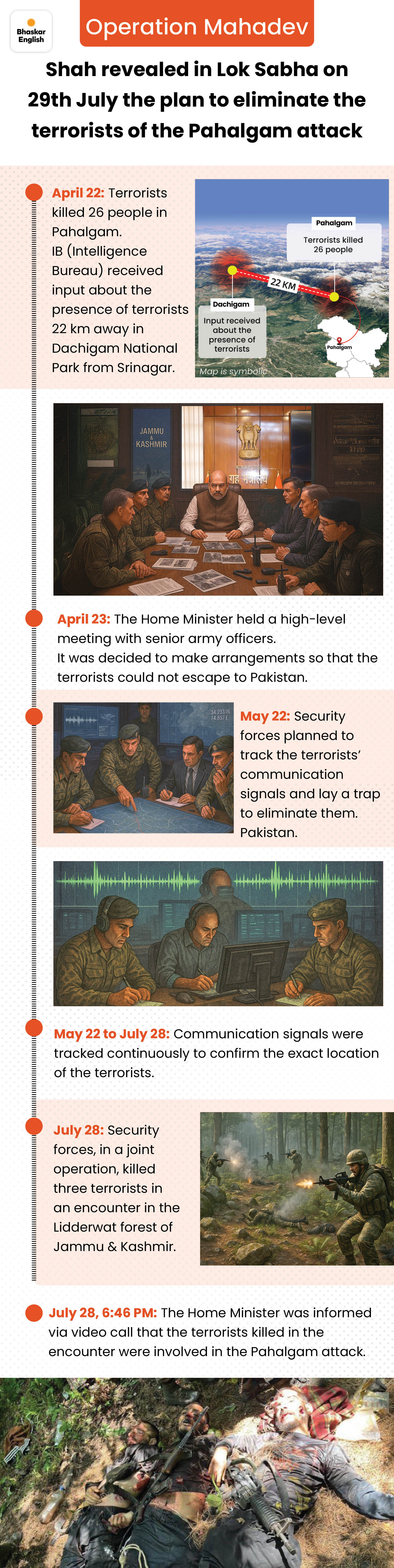
- Spirituality is central to morale in the Indian Army, though it does not mean endorsing any one religion.
- When General Upendra Dwivedi assumed the role of Army Chief in 2024, a combined interfaith prayer was held in South Block, reflecting the same tradition.
- Lt Col Sodhi underlines that religion in the Army is not about exclusion, it’s about shared resilience.
- Spiritual invocations offer psychological anchoring, especially in combat.
- Hence, names drawn from spiritual imagery, like Shivshakti, resonate deeply with the troops, providing them with strength drawn from belief rather than dogma.
How are war cries decided for specific battalions?
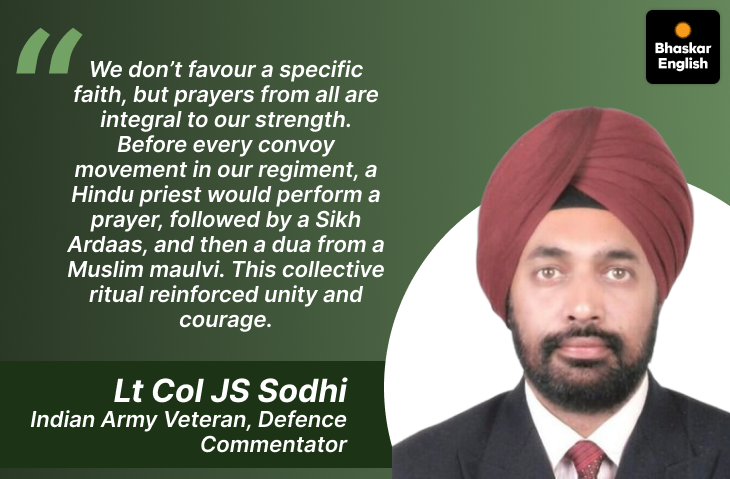
Unlike operation names, which change from mission to mission, war cries remain fixed and are deeply tied to a battalion’s ethnic and regional composition.
- Lt Col Sodhi explains that India’s regiments often recruit soldiers from specific geographies or communities.
- These regional ties influence not only their customs but also their slogans of war.
- For instance, Rajput regiments may chant “Har Har Mahadev”, while Sikh units use “Bole So Nihal, Sat Sri Akal”, and Jats rally with “Jat Balwan, Jai Bhagwan”.
- In Lt Col Sodhi’s own unit, cries like “Chhatrapati Shivaji Maharaj Ki Jai” coexist with those from Sikh and Muslim traditions, reflecting the unit’s composition.
- These cries are not arbitrarily assigned; they carry legacy, pride, and cultural continuity.
- They haven’t changed over the decades because regimental identities remain stable.
- While operation names shift with missions, war cries endure as a call to unity, reminding soldiers of their lineage, courage, and collective purpose.
Which properties are codenamed during such operations?
According to Lt Col Sodhi, codenames are used extensively during military operations and can be assigned to a variety of properties.
- These include the locations being targeted, the officers involved, specific units, timings of critical manoeuvres, and even moments such as when to open or cease fire.
- Some codenames are standardised across the military, taught during training, and recognised immediately by personnel.
- These fixed codes are part of the internal military lexicon and remain unchanged.
- Others, however, are mission-specific and issued in classified instructions before the operation begins.
- For example, a hill or ridge may be temporarily codenamed ‘Alpha’ or ‘Blacktop’ during one operation and something entirely different in another.
- These flexible codenames help maintain secrecy and operational clarity.
- Their temporary nature ensures that only those involved have access to their meanings, thereby limiting the risk of information leaks or miscommunication on the field.
Do codenames used during these operations change midway?
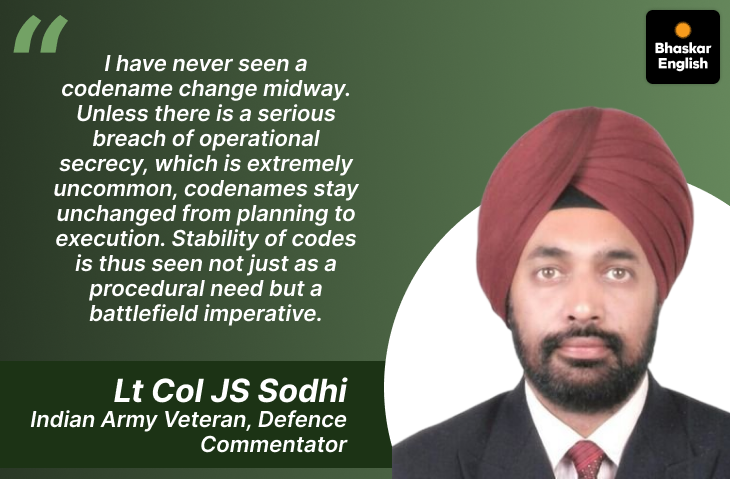
Changing codenames during an ongoing operation is extremely rare, notes Lt Col Sodhi.
- Once an operation begins, the associated codenames, whether for terrain, personnel, or specific movements, are locked in to avoid confusion.
- These names are communicated in advance through “signal instructions” to all troops involved.
- While there are some fixed codenames used universally in military training, the operation-specific ones are valid only for the mission’s duration.
- This strict protocol ensures coherence during fast-paced, high-risk manoeuvres.
- The Army prioritises clarity and consistency in its internal messaging systems, especially when lives are at stake.