India’s Strategic Leverage Amidst US-China Rivalry Over Pakistan
- August 25, 2025
- Posted by: Antara Ghosal Singh
- Categories: China, India, US
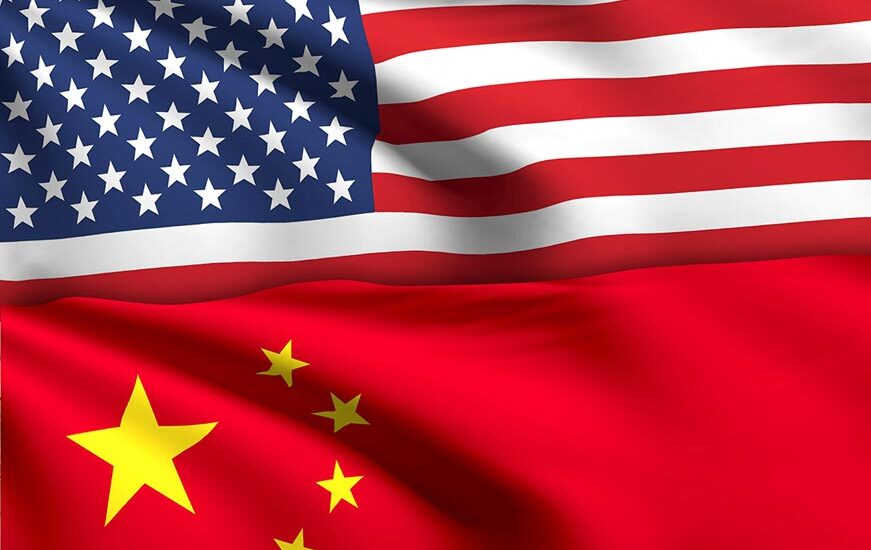
India must leverage US-China tensions over Pakistan to prevent either from arming Islamabad with advanced military tech
A recent statement on 4 July by Deputy Chief of Army Staff, Lieutenant-General Rahul R. Singh, about China providing real-time intel and weapons to Pakistan during Operation Sindoor (7-10, May 2025) has brought the issue of China-Pakistan “battlefield collusion” under the scanner. Scholars have been debating how India can prepare for the intensifying China-Pakistan strategic nexus, now playing out in a big way on the battlefield. Some of the key suggestions from India’s strategic community regarding this have been to build domestic capability, enhance military deterrence, develop asymmetric pressure points, and intensify external balancing. Adding on to the ongoing debate, this paper, based on a study of Chinese language literature, explores the possibility of India leveraging the intensifying US-China competition over Pakistan as a tool to secure its western front.
Many Chinese commentators pointed out how Pakistani military officers flew Chinese fighter jets to guard Pakistan’s airspace, but in the end, their diplomats laid the credit on the American altar.
Aside from India, China, too, has been equally concerned about Pakistani Field Marshall Munir meeting President Trump on 18 June 2025. Pakistan going a step ahead and nominating President Trump for the Nobel Peace Prize, caused public outrage in China. At a time when China is seeking to mobilise global public opinion against “Trump’s tariff tyranny”, branding him “the destroyer of the global order”, one of China’s closest allies, Pakistan’s endorsement of President Trump as a “genuine peacemaker” has proven to be a public embarrassment for China. Many Chinese commentators pointed out how Pakistani military officers flew Chinese fighter jets to guard Pakistan’s airspace, but in the end, their diplomats laid the credit on the American altar. This is at a time when China had its own plans to lead the ceasefire negotiation between India and Pakistan, getting the Indus Water Treaty restored, strengthening military communication channels etc., under the Shanghai Cooperation Organization (SCO) format.
Similarly, U.S. CENTCOM Chief Gen. Michael Kurilla’s endorsement of Pakistan as a “phenomenal partner” to the US not only set the alarm bell ringing in New Delhi, but also in Beijing. Beijing also paid close attention to Pakistan’s Air Chief Marshal Zaheer Ahmed Baber Sidhu’s landmark US visit and immediately followed it up with a high-level military delegation to Islamabad.
U.S. CENTCOM Chief Gen. Michael Kurilla’s endorsement of Pakistan as a “phenomenal partner” to the US not only set the alarm bell ringing in New Delhi, but also in Beijing.
As per several Chinese commentators, China’s key concerns over the sudden warming up of Pakistan-US ties under President Trump are as follows:
- Will the China-Pakistan Economic Corridor, worth US$62 billion, be infiltrated and sabotaged due to the warming of US-Pakistan relations? China, they argued, have spent hundreds of billions of dollars to build the Gwadar Port, which was just connected to Afghanistan’s Khyber Pass in May this year, bypassing the Strait of Malacca and directly connecting to the Indian Ocean, shortening the route by 2,600 kilometres. Now with Trump and Munir shaking hands, will American capital infiltrate and sabotage China’s CPEC “lifeline”?
- Was the secret meeting between Trump and Munir only about stopping Pakistan from helping Iran, or also about obtaining Chinese military intelligence? Did Trump want to pry into the latest military insider information about China’s weapons and combat systems used during the India-Pakistan air war, to find out the bottom line of China’s military strength and pave the way for the strategic deployment of the US military?
- Did the US want to woo Pakistan to disrupt China’s Middle East policy plans? If the Islamic world’s only nuclear-armed country may turn against Iran, China’s moral stance of condemning Israel’s attacks is being quietly dismantled by its closest partner.
- Some Chinese observers even objected to the US-Pakistan cryptocurrency alliance. The US plans to build Islamabad into a South Asian encryption centre, they argued, may weaken the cross-border settlement status of the RMB in Pakistan, hinder China’s digital currency layout in South Asia, divert energy resources from the China-Pakistan Economic Corridor (CPEC), and threaten China’s overall strategic layout in Pakistan. It was further argued that China has invested tens of billions of dollars in the construction of the CPEC in order to allow Pakistan to develop step by step, by first focusing on industrial manufacturing. But now Pakistan wants to follow the United States’ footsteps and take shortcuts to develop financial capital, which puts China’s previous investments in Pakistan’s “real economy” under stress.
Many in China called Pakistan’s sudden “opportunistic” turnaround a stab in China’s back, something that hurt the core pillar of China-Pakistan relations一strategic mutual trust. They called it a wake-up call for China, the lesson being “interest comes before friendship…Even the most trusted friends can falter when it comes to national interests…And that CPEC cannot progress without mutual political trust”.
Many in China called Pakistan’s sudden “opportunistic” turnaround a stab in China’s back, something that hurt the core pillar of China-Pakistan relations一strategic mutual trust.
Others, however, think that China should not panic over the possibility of Trump using tariff exemptions一Pakistan is facing a 29 percent punitive tariff一or arms sales (like sale of F35) as a bait to disrupt China-Pakistan “iron friendship”. They argue that the foundation of the China-Pakistan “all-weather strategic partnership” is solid and cannot be easily shaken by a few positive gestures from the US. The China-Pakistan friendship is not only reflected in diplomatic rhetoric, but also deeply rooted in the political, economic and military aspects of both sides.
On the other hand, they point out how America faces difficult choices on the question of Pakistan, so regardless of how America engages Pakistan, it is a net win for China. For example, in the Chinese assessment, Pakistan is now using China’s J-35 as a bargaining chip to attain the most advanced AIM-120D medium-range air-to-air missiles from the US. If the US agrees to Pakistan’s demand to temporarily win over its “former ally”, it will have to pay a heavy price. Firstly, the move will trigger resentment in New Delhi and completely disrupt the US “Indo-Pacific Strategy”, which will be a welcome development for China. Secondly, by doing so, the US will have to accept the challenge of encountering an unprecedented level of China-Pakistan defence cooperation, with a high chance of its top technology ending up with China, directly threatening the US military’s air supremacy in the Asia-Pacific region. Contrarily, if the US refuses to conclude the deal, the move will further push Pakistan into China’s arms. In the meantime, as the negotiation goes on, the US bailing out the Pakistani economy through International Monetary Fund (IMF) loans is also good for China, as it will help Pakistan to prioritise servicing Chinese debts.
The move will trigger resentment in New Delhi and completely disrupt the US “Indo-Pacific Strategy”, which will be a welcome development for China.
From an Indian point of view, it is important to pay closer attention to the evolving dynamics of the US-China-Pakistan triangle[1]. It is true that for long, Pakistan has deftly managed its ties with China and the US with little conflict of interest. However, as China-US great power competition intensifies, the balancing act is getting tougher by the day, with intense rivalry, insecurity, mistrust, and confusion becoming the dominant trend of this trilateral relationship- something Indian strategic community needs to leverage strategically, so that neither China nor the US has the confidence to invest in or arm Pakistan with their top military technology.
Antara Ghosal Singh is a Fellow at the Strategic Studies Programme at Observer Research Foundation.
[1] This can be extended to Bangladesh as well. While on one hand, China is striving to bring Pakistan and Bangladesh together in a trilateral format, on the other hand, China is most concerned about the current Bangladesh government’s deep ties with the American political elites.